Showing posts with label Yosemite. Show all posts

Monday, April 04, 2016

Project Spotlight: Yosemite National Park


Combing the meadows
Yosemite National Park stretches across the western slopes of the Sierra Nevada mountain range, spanning nearly 1,200 square miles. Our nation's third national park, Yosemite is widely known for its magnificent rock formations, grassy meadows, crystal-clear streams, majestic waterfalls, rushing rivers, ancient giant sequoia trees, and abundant wildlife.

Over 90% of the park is designated as wilderness, providing a phenomenal variety of growing conditions and habitat for more than 1,450 native plant species.

Our ninth year service project will take place June 5-11, 2016 in the beautiful Hetch Hetchy section of the park. Carved by glaciers and drained by the Tuolumne river, the Hetch Hetchy Valley lies in the northwestern part of Yosemite National Park and contains some of the tallest waterfalls in North America: Wapama Falls, at 1,700 ft (520 m), and Tueeulala Falls, at 840 ft (260 m).

Western Salsify
Our continuing project in Yosemite is removal of several species of invasive weeds such as wooly mullein, bull thistle and western salsify. These invasive plants have the potential to rapidly displace native plants, alter fire regimes, and/or significantly alter ecosystem structure or function.

Common mullein
Because of the complex ecological relationships among native organisms, impacts to native plant communities can negatively affect associated wildlife throughout Yosemite. Invasive plants are prioritized for control based upon the threat they pose and the park's capabilities for successful control. Find out more about non-native species in Yosemite and what you can do to help here.

Project participants will hike in approximately 6.5 miles around the northern shore of the Hetch Hetchy reservoir to Rancheria Falls and set up a basecamp. The hike in is a scenic treat with a modest elevation gain that includes hiking over a dam, through a short tunnel, across a few foot bridges, under some spectacular waterfalls, and maybe even a mist rainbow or two.

Hiking along the reservoir

Wapama Falls
A refreshing mist rainbow
A visitor in camp
From our basecamp we will hike approximately 3 miles to and from grassy meadows in the area each day to work. We'll also likely conduct a day of campsite restoration in the backpackers camp ground at Rancheria Falls. The Park Service will provide pack support to carry the tools, food and commissary gear to camp.

Weed warriors!
Come spend a week in beautiful Yosemite National Park and give something back to our nation's wild lands with Wilderness Volunteers! You can get more information and register for our Yosemite project here. For information about our other 2016 projects visit our website. See more great photos from previous WV Yosemite service projects over at the WV Photo Gallery.

Hiking to work 

Thursday, October 01, 2015

Yosemite Turns 125 on October 1st

Today Yosemite National Park is celebrating the 125th anniversary of President Benjamin Harrison signing legislation which made Yosemite our nation's third National Park.


Yosemite National Park park spans nearly 1,200 square miles on the western slope of the Sierra Nevada range in central eastern California. 

Each year more than 3 million visitors go to Yosemite to see magnificent rock formations, grassy meadows, crystal-clear streams, majestic waterfalls, rushing rivers, ancient giant sequoia trees, and abundant wildlife.

Climbing the cable route up Half Dome


On top of Half Dome looking down into the valley
The granite and water of Yosemite make for spectacular landscapes.

At the top of the steel cables.

Hetch Hetchy Reservoir


To honor this historic anniversary, Yosemite is holding special events in the park throughout the day, including a large public ceremony in Yosemite Valley that will have special speakers, dignitaries, a commemorative program and cake!

Friday, May 29, 2015

Amazing time-lapse photography of our National Parks

Our friends at The Wilderness Society shared a wonderful post featuring some gorgeous time-lapse photography of our National Parks. Below are a few of our favorites, where we also happen to have projects in 2015!

Yosemite National Park - June 7-13, 2015
There may still be time to throw your pack in the car and join WV in giving back on a backpack adventure in this outstanding National Park. This time-lapse is jaw-droppingly beautiful, but that's not surprising in Yosemite.


Joshua Tree National Park - October 11-18, 2015
This Southern California National Park receives more than 1 million visitors, and there's really no question as to why. Our project there is currently full, but you're welcome to add your name to the waitlist in case of a cancellation, which does happen. And you can join us next year as well!


Acadia National Park - September 20-26, 2015
Spots remain on our continuing service project in one of the most picturesque, wild places in the northeast. You'll get a good overview of the Park while giving something back.


Acadia National Park from John Fouse on Vimeo.

Zion National Park
Our continuing service project in Zion is currently full for 2015, but you can always visit this gorgeous National Park on your way to other WV service projects on the Colorado Plateau like the San Rafael Swell project or Grand Gulch-Cedar Mesa project that both still have spaces available.


Denali National Park - July 12-18, 2015
WV returns to help maintain the Savage River Trail, a trail we helped build! This project is full for 2015, but stay tuned, as we plan to return in 2016.


Olympic National Park - October 18-24, 2015
Our continuing project on the Elwha is helping naturalize the area after the dams were removed, in many cases planting saplings from seed previous WV groups helped collect.  Currently this project is full, but you're always welcome on the waitlist in case a cancellation or two occurs.


Big Bend National Park - November 1-7, 2015
Another continuing project, WV will once again return to the jewel on the Rio Grande to give something back with the National Park Service. While this project is full, WV is offering another spectacular trip in Saguaro National Park that has spaces available. 


Tuesday, March 31, 2015

Yosemite Releases Bighorn Sheep

A dozen endangered Sierra Nevada bighorn sheep were released in Yosemite National Park last week. They included nine ewes and three rams from the Inyo National Forest and Sequoia National Park.

The Sierra Nevada bighorn is the only federally endangered mammal in Yosemite, listed in 2000 after the population plunged to record lows (around 100). The park estimates that prior to the arrival of white settlers, the bighorn populations likely numbered in the thousands.

"Bighorn sheep are a true symbol of wilderness and represent the need to protect wild lands," said Frank Dean, Yosemite Conservancy President. "With the reintroduction, visitors will experience a wilderness similar to that found in the days of John Muir, when large alpine wildlife was abundant."

Read more here.

Tuesday, September 02, 2014

Rethinking the Wild

In a recent NYTimes editorial, Christopher Solomon states that the Wilderness Act, at 50 years, is facing a midlife crisis. Solomon cites some environmentalists that believe human intervention may be required in order to save or restore the original wilderness qualities in many of our wilderness areas.
Maroon Bells Snowmass Wilderness

Due to climate change, areas like Yosemite's Tuolumne Meadows is drying out and being replaced by lodgepole pine forest. Should the Park Service keep the meadow intact by cutting these trees and irrigating the meadow? Sequoia and Joshua Tree national parks are considering interventions to help these titular species survive rising temperatures and drought, either relocating trees or irrigating groves. In Bandelier National Monument, the Park Service has already stepped in to remove the increasing pinon-juniper forest to stave off erosion of thousands of archaeological sites and restore the grassland character of the area.

It's an interesting question -- is Wilderness truly wild? Is any place on the planet not shaped by human impact? Can we really experience land "untrammeled by man?" Grazing is still an allowed use of Wilderness, and the impacts of over-grazing are evident everywhere in the American west (compacted soils, cutbanks, disappearance of native grasses and other species, and the invasion of nonnatives). Popular areas are overrun by recreationalists, like the Maroon Bells Snowmass Wilderness where hundreds of people and their dogs pound the trails everyday.

What do you think? Is Wilderness worth keeping? Do we relax the rules to allow more intervention by land agencies or contracted concessions? Is it time to rewrite the Wilderness Act?


Thursday, September 12, 2013

WV Honored as Yosemite Volunteer Group of the Year


Wilderness Volunteers has been selected as the Volunteer Group of the Year by Yosemite National Park!

With over 9,500 volunteers donating their time and energy in Yosemite this year, it is a great honor to be chosen as the best of the year. We're grateful for the hard work of all of our volunteer participants and especially the project's leaders, Dean and Laurie Twehues. Victoria Hartman, Yosemite's Wilderness Restoration Coordinator, recognizes the group by saying, "Your work is critical to the park’s ability to protect and preserve our rich natural and cultural heritage while providing meaningful and enjoyable experiences for our visitors." All participants will be receiving a thank you gift from the Park as part of the award.

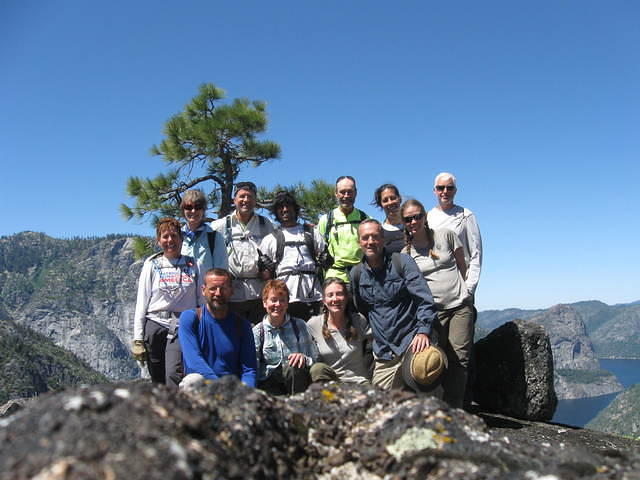
The award-winning WV Yosemite volunteers, June 2013. Photo by Dean Twehues
We just completed the 6th project in the Rancheria Falls area, in the Hetch Hetchy section of the Park. Our work includes removing and ecologically restoring inappropriate campsites, as well as removing non-native invasive species such as salsify, mullein and bull thistle from the Tiltill meadow, a remote high sierra valley with an abundance of wetlands and wildlife. The project requires volunteers to backpack in approximately 6.5 miles to base camp and an additional daily 6 mile roundtrip hike to get to the work site. Sadly, the Hetch Hetchy area is still being impacted by the massive Rim Fire, so we're sure our volunteer stewardship work will be greatly needed in the coming years.

Photo of Hetch Hetchy taken on the WV service project in Yosemite, June 2013 by Lawrence Herko

Dave Pacheco and Paul Goldberg of the WV staff will be on hand in Yosemite to accept the award. The award ceremony will be held on National Public Lands Day - Saturday, September 28th at 4pm in front of the Valley Visitor Center, and will be followed by a raffle and live music as part of the Park's 5-day Yosemite Facelift event. You are welcome to come celebrate with us! The 10th annual Yosemite Facelift is an effort to help clean-up the Park at the end of the busy summer season and runs from September 24 - 29.

Volunteers working in Yosemite, June 2013. Photo by George Ralston

See more photos from this project and more via the WV photo gallery.

Wednesday, February 18, 2009

Off the Wall

Winter is getting old in Flagstaff:


I'm ready for spring. While I'm waiting, keeping warm, I've been catching up on my reading. Off the Wall: Death in Yosemite is subtitled, "Gripping accounts of all known fatal mishaps in America's first protected land of scenic wonders." Written by Michael Ghiglieri and Butch Farabee, it's a cautionary, sobering read. It starts off with deaths in waterfalls (almost fifty people have been swept to their death), which sent shivers down my spine because I just did a trip in Yosemite last June.

We were camped near a huge waterfall of raging, thunderous water where one false move could have ended tragically. Not having read this book yet, I was mercifully less aware how easily one of us could have slipped on the smooth (and often wet), slippery granite that makes up the backcountry of Yosemite.

Besides waterfalls, the book describes deaths due to snow, downed aircraft, falls while hiking and scrambling, vehicular mishaps, climbing (fewer died in climbing than in hiking and scrambling accidents), drowning, flora and fauna (stay away from horses)(and no, no one has been killed by a bear in Yosemite, ever), freak accidents and getting lost. In all, from 1851 through 2006, there were 765 traumatic deaths in the Park. This includes 29 park builders (O'Shaunessy dam was big here).

Reading about all these mishaps, many of them in great detail, reminds me how tenuous our hold is on life -- there are many ways to die; lots of them very sudden. Lots caused by simple bad luck.

But many teach lessons about planning, being prepared, being willing to bail when the weather changes, being attentive to your surroundings and knowing what to do when things start going wrong (keeping your head about you). These are lessons that can be easily forgotten -- lessons that need to be revisted often when you have a life with lots of adventure.

At the same time, we have to remember that life is fatal. None of us will get out of here alive. People die everyday in accidents around their houses. Football players die (and are horribly injured) every year. People pay big bucks to die on Everest. Planes fall on houses (thankfully very infrequently).

If we are lucky, we continue to pursue the things that interest us. For me, it's getting outside into nature, away from the throngs and noise and stuff. I will accept that my life has risks, and that I need to pay attention.

And continue to learn the lessons taught by the experiences of others. This summer, when I'm in Yosemite camped near those beautiful (raging) waterfalls, I'll remind the group about what could happen in a moment of inattention...