Showing posts with label cactus. Show all posts

Tuesday, November 19, 2013

Photo from the Field: Superstition Wilderness by Sarah Slover

Photo from the Field: Taken by Sarah Slover on WV's spring service project in the Superstition Wilderness of Arizona's Tonto National Forest in March 2012.

You can sign up now for WV's 2014 service project in the Superstition Wilderness, as well as many others at http://www.wildernessvolunteers.org/php/projects.php


Wednesday, February 06, 2013

Project Spotlight: Mojave National Preserve

A Joshua Tree in Mojave sunset light, photo by Paul Goldberg

Today we spotlight the WV project in the vast Mojave National Preserve, the 3rd largest unit of the National Park System in the contiguous US. Formerly named the East Mojave National Scenic Area and managed by the Bureau of Land Management, these striking 1.6 million acres were established as a preserve on Halloween in 1994 by the California Desert Protection Act, including a 695,000 acre wilderness area. Nestled between highways 15 and 40, the area offers many, many fascinating features and so much to explore. Towering mountain ranges present “sky island” forests of pinyon pine and white fir over great mesas, dry river beds and low-lying deserts featuring impressive sand dunes and beautiful Joshua tree forests.

Hole-in-the-Wall, photo courtesy of the US Dept. of the Interior
An intriguing human history is here to explore alongside unbelievable geological and ecological fascinations. Notable features include the Kelso Dunes, the Marl Mountains and the Cima Dome, which features the largest and densest stand of Joshua trees in the world. Striking volcanic formations such as Hole-in-the-Wall and the Cinder Cone Lava Beds speak to the incredible geology.  2.5 billion year old rocks have been found on the Clark Mountains.

The abandoned Post Office in the ghost town of Kelso, photo by Pierre Camateros
More recent human history can be seen in the preserve’s ghost towns, abandoned mines and the Kelso depot, now part of the visitor center.  Prior to European contact, Mojave tribes such as the Chemehuevi, lived in the mountains and along the Colorado river eating prickly pear, mesquite and roasted agave blooms and hunting deer and bighorn sheep.

A local Mojave tour guide, photo by Paul Goldberg

This dragonfly tried to hitchhike on my car's antenna, photo by Paul Goldberg

Despite appearing as a relatively barren landscape, the area is teeming with varied and interesting animal life including many species endemic to region or otherwise rarely found outside of the preserve. One such example is the Mojave Fringe-toed Lizard (Uma scoparia), which is specialized in its ability to "swim" under sand.

Birds, reptiles, rodents, and larger mammals all reside in the area, although where you might find them varies due to temperature, time of day and elevation. A large percentage of desert animals are nocturnal, or active at night, including desert rodents, bats, owls, mountain lion, skunks, and foxes. Other animals in the Mojave are crepuscular, active at dawn and dusk.


Mojave Desert Tortoise populations are threatened, partly because of invasive plants, photo courtesy of NPS
The low regions of the Preserve are arid, with creosote bushes dominating the landscape on over 70% of the Preserve, while the mountains offer varied environments with cooler temperatures.  The service project we’ll be working on will be critical in removing invasive species of Russian thistle at the key moment before they go to seed. We will use a hula hoe, a tool specifically designed for removing thistle. We’ll camp at a comfy developed campsite with running water in the mountains which will serve as a prime location for the project as well as offering plenty of interesting options for us to explore in our free time. Learn more about the WV project in the Mojave National Preserve.

The beautiful solitude of the Mojave National Preserve, photo courtesy of the NPS

Wednesday, January 09, 2013

Trip Spotlight: Continental Divide Trail in the Gila National Forest


Photo from WV's CDT Service Project in the Gila NF 2012
Today we turn the spotlight onto WV’s service project along the Continental Divide Trail (CDT) in the Gila National Forest. There are lots of interesting tidbits about the history of the land and the remarkable CDT in addition to the abundant hot springs and diverse wild beauty of the area. Established as a National Forest in 1905, the Gila National Forest offers a vast and remote cross section of natural southwestern splendor, from the dry, flat semi-desert terrain in the lowlands up to rugged, high mountains and canyons. The 6th largest National Forest in the continental US, Gila boasts a broad and robust biodiversity and a unique confluence of ecosystems with riparian systems adjacent to high desert and old growth forest.
Flowering cacti in the Gila National Forest
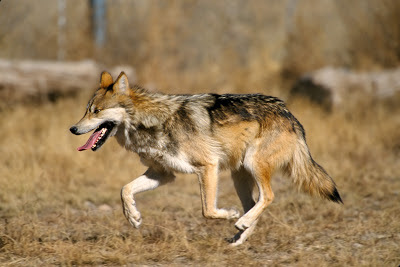
This land is also the birthplace of America's wilderness-conservation movement, as the Gila Wilderness within the National Forest was established as the very first designated wilderness in the country in 1924. The rewards of wilderness designation can be found throughout the unspoiled land. The Mogollon Mountains top out at 11,000 feet and support rich high spruce, juniper, aspen and fir forests, while down at 4,200 feet octoillo as well as chihuahuan and upper sonoran desert cacti dominate the landscape. Wildlife such as the black bear, mountain lion, elk, deer, antelope, bighorn sheep, and wild turkey roam the area while the bald eagle, peregrine falcon, and the red-tailed hawk are amongst the birds that soar overhead. Many imperiled species reside in the Gila National Forest including the mexican spotted owl, mexican grey wolf, gila chub, southwestern willow flycatcher, loach minnow, spikedance and more.
Mexican Grey Wolf, Photo by Jim Clark USFWS
Indigenous populations have a longstanding history with this land. An ancient Puebloan people, the Mogollon, are thought to be the first human settlers in the area. Before or after our service project, you can visit the ancient past with a trip to the Gila Cliff Dwelling National Monument, located within the National Forest, to see the remarkable structures within five sandstone caves. It is not known why the dwellings were abandoned 700 years ago, although Hopi oral tradition does say migrations occurred due to cycles of beliefs and in response to changing climate. 
Gila Cliff Dwelling photo by NPS Photo, Barry Nielsen
Our service project is one of two we have that focuses on the construction of a segment of the epic Continental Divide Trail (CDT). Stretching from Mexico into Canada, the trail travels 3,100 miles following the Continental Divide along the Rocky Mountains, traversing Montana, Idaho, Wyoming, Colorado and New Mexico. Established in 1978, the CDT offers opportunity for adventure with one of the most significant features on the continent. The trail is about 70% complete and includes dedicated trail and small roads. We'll work on the trail while based in a spike camp in the nearby forest, hiking to work everyday where we'll construct tread, brush the trail corridor, and install erosion controls. This trip is suitable for seasoned volunteers as well as beginners in good shape who want to learn about camping, trail construction and Leave No Trace. Learn more and sign up for WV’s Continental Divide Trail Project in the Gila National Forest.
Photo taken during WV's Gila NF Service Project 2012

Wednesday, November 12, 2008

Cactus thorns go through gloves

The Wilderness Volunteers Board of Directors met for the annual meeting at Casa McLean in Tucson earlier this month. Before the meeting they did a day of work at Saguaro National Park, clearing the Cactus Forest Trail of plants encroaching into the trail corridor. This consisted of lopping and sawing a variety of spiny plants and then moving or throwing the cut pieces out of sight. The day was beautiful, the Sonoran Desert was lush, and the thorns were sharp!