Friday, September 24, 2010

Flash Flood

I just returned from the Glen Canyon NRA project where we are removing Russian olive trees from the main corridor of the Escalante River. I've been involved in this project since the mid-1990s, and really enjoy seeing the river cleared of this massively invasive alien. These trees kill the native species and crowd everything along the river's edge, hanging over the river and making travel along the river a painful experience. The trees have long needle-sharp red thorns.
Here are two shots of the river, before and after removal of the trees.We reached the 40-mile mark with this trip -- 40-miles of the river corridor have been cleared of the awful trees from the reservoir (Lake Powell) upriver. Follow-up trips every fall keep new starts and any regrowth in check.

On our day off, GLCA Ranger Bill Wolverton takes us on the most incredible dayhikes. I've been in tiny slot canyons, up scary Moki steps, up and down chimneys, learned all about canyoneering, visited remote arches, slithered through mud cracks, rinsed off in refreshing waterfalls, climbed sand dams and entered fern grottos. I can't wait for the next trip here in the spring.

Which brings me to to the title of this post: We are always watching the river while on these projects, and have witnessed several episodes of the water rising quickly and side channels flooding, even when the sky is clear. When it's raining, we are careful to keep all the volunteers on the side of the river where camp is located, but have had a couple of incidents where folks were trapped on the other side for a couple of hours or overnight waiting for the river to drop. We've had no injuries due to our diligence.

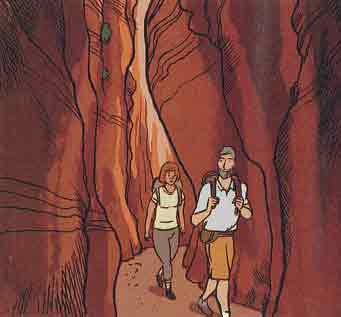
Wilderness Volunteers leader Curt Mobley has a story of a flash flood in Zion when he was hiking with this wife Ann Kruse a few years back that was told in the Sept 2010 issue of Sierra Magazine, and he's given us permission to share his story here (click on the picture to see the full image):

Sunday, September 19, 2010

By Foot and By Paddle - WV Heads to the Hills and the Water

Maroon Bells-Snowmass Wilderness, CO (2010)

It's been a busy year for volunteer leaders Robin and Carter Bland, who have led four trips all across the country, ranging from the canyons of Utah to the mountains of New Hampshire. And they're not done yet, as they've just embarked on yet another trip to Maine's Acadia National Park. As you can imagine, all that hiking makes for plenty to write about. Here's Robin's report (and a recipe) from their latest adventures:

"Over a five week span this summer, I enjoyed two different and beautiful Wilderness Volunteers experiences. In late July, I participated in the Maroon Bells-Snowmass Wilderness project led by Brian Bone and my husband, Carter Bland. We camped at 10,800 feet beneath spectacular jagged peaks and alongside huge meadows of wildflowers at peak bloom. Our work project was building check dams and waterbars on the West Maroon Pass trail between Crested Butte and Aspen. Each day, as we lunched amidst this glorious scenery, I thought there’s no better view at the best table in the finest restaurant! On Tuesday, a photographer from the Crested Butte News happened to hike by and stopped to take a photo of our crew. Later in the week, other hikers passing us on the trail mentioned that they had seen our picture in the paper - what great publicity for Wilderness Volunteers. On our day off, some of us hiked to Frigid Air pass, where we were rewarded by a fantastic view of the iconic Maroon Bells. Luckily, we reached the pass before any rumble of thunder - a daily occurrence in summer afternoons - could turn us back. It was a week enjoyed by novice backpackers and veterans alike."

Boundary Waters Canoe Area Wilderness, MN (2010)

"A month later, I enjoyed a very different landscape when Carter and I led a WV crew to a beautiful corner of the Boundary Waters Canoe Area Wilderness (BWCAW) in the Superior National Forest of northern Minnesota. The BWCAW comprises over one million acres of crystal clear lakes, sparkling streams, and boreal forest. After shuttling across Lake Vermillion in a US Forest Service power boat, we paddled our canoes across Trout and Pine Lakes to our basecamp where we set up for a week of portage trail maintenance and campsite rehab. One of our tasks was to build a stone staircase at the landing for our campsite. We were treated to gorgeous weather all week and, after work each day, were rewarded with a dip - or long swim for some - in the warm water. As for the legendary BWCAW mosquitoes and biting flies...they more or less left us in peace for the week. Loons and whippoorwills serenaded us each night as we sat by our campfire and watched the light of the full moon glisten across the water. It was a little bit of heaven."

Two beautiful trips, two different landscapes. Two great ways to Give Something Back.

--------------------------------------

Here is a recipe for a cereal/energy bar that was popular on both trips. Some ate it at breakfast; others took it to have alongside their lunch.

1 cup peanut butter
1 1/4 cup honey
4 cups Grape-Nuts cereal ( or use a generic barley nugget cereal)
1 cup quick cooking oatmeal
1 cup raisins or craisins

Combine honey and peanut butter in saucepan over medium heat. Bring to a boil and cook for 1 minute, stirring constantly. Remove from heat and add the remaining ingredients, mixing well.
Spread into a 9”X13” baking pan that has been sprayed with cooking oil (e.g. Pam). Use wax paper to press into pan and flatten it out. Cool in refrigerator for 30 minutes, cut into bars, and enjoy!

Tuesday, September 07, 2010

Lights, Camera...Awesome!

I've enjoyed lots of incredible sights during my time in the woods with Wilderness Volunteers. Bull elk grazing along the Continental Divide. Mama moose and calf taking a dip in a mountain lake. Eagles soaring on high. Breathtaking sunsets and moonrises, and gorgeous views of peaks and valleys. Beautiful waterfalls, picturesque streams, and swimming holes that leave you with a smile. A week's worth of work knocked out in a matter of days. And total strangers transformed into lifelong friends in only a week's time.

It's what keeps me coming back.

But nothing I have seen over the last ten years could have prepared me for what I witnessed in Idaho's backcountry last month. Heads are still shaking, jaws still agape at the slightest mention of it. The display of sheer skill and athleticism was mesmerizing, unparalleled in the rest of the animal kingdom, and left me (and others) in disbelief.

I don't know how else to say it: we witnessed greatness.

Fortunately, the cameras were rolling. I could go on, but it's best you see for yourself.


Wednesday, September 01, 2010

Idaho's Sawtooths Revisited

Sawtooth Wilderness, ID (2010)

One of the numerous rewards of having been a Wilderness Volunteers leader for many years is working with the same people - both trip participants and agency personnel. Often on my trips, I will already know close to half the participants from having worked with them previously. I have also enjoyed the working relationships I have established with certain agency personnel in areas to which I have returned over the years as a trip leader, and in no place is this more so than in the Sawtooth National Recreation Area in central Idaho.

I have been going to the Sawtooths since 1992, and I have been leading WV trips there since 2003. Since I began leading trips to the Sawtooths, I have come to know Liese Dean, the Wilderness Program Coordinator, and we have an easy and cordial working relationship. In 2004, I began working in the backcountry with Deb Peters, who not only packs in, with the help of some mules and horses, all the tools, commissary gear, and food but works with and guides the WV groups in various projects. I have felt fortunate in knowing these two individuals who are dedicated to preserving and maintaining the beautiful Sawtooth Wilderness. Their enthusiasm and love of the area is contagious and has been instrumental in my returning year after year to the Sawtooths.

This year’s trip was a special one for me because Liese and Deb honored me and my co-leader and wife, Bunny, with tangible recognition of our contribution in sweat equity to the Sawtooths. I was given a beautiful framed photograph of a lake high in the Sawtooths surrounded by mountains. Bunny received a much more practical but no less thoughtful gift of some Smokey Bear sleep bottoms. She proudly wore them each evening of the Sawtooth trip. My memento now has an honored place on a wall at home.

The trip was special for other reasons as well. John Kaye and his son Rob have been participating in the Sawtooth trip since 2004. John has been there every year, and having him along is like having a third unofficial leader. Rob hasn’t been on the trip every year, but when he is, I appreciate his strength, work ethic, and enthusiasm for the task at hand. I was especially happy to have veteran trip participants such as John and Rob on this trip because the work we did was not only technical in nature but difficult and strenuous. Luckily the entire crew was equally enthusiastic and hard working, making the week we spent in the backcountry one of the more pleasant and satisfying in recent memory.

Our work was on the Iron Creek Trail, the trail which leads to Sawtooth Lake, and is probably the most popular trail on the east side of the Sawtooths. The main project was rebuilding a section of shelf trail that was in danger of collapsing. Repairing this section of trail required a method known as cribbing. Cribbing involves placing a sturdy base of rocks below the trail tread by digging into the downhill side of the trail. Rocks are then added to this base until the structure reaches above the existing trail. The tread is then filled in. This method of trail building requires the use of large rocks which are of the appropriate size and shape. Five of us worked on a section of trail which was approximately thirty feet long. The cribbing base was in some parts about ten feet below the tread. The group dismantled and rebuilt the section in two and a half days. Other members of the group completed a smaller section of cribbing, removed rocks from the trail, widened the trail, built stone steps, cleared rubble from the trail, cut back tree branches, and generally improved the trail. Each day dozens of day hikers and a few backpackers came by as we worked; our group and the work we were doing became a showcase for what WV does.

Not only did this group work hard, but its members played hard and were a hardy group. Our campsite was at Alpine Lake, a small lake about a half mile from the main worksite. Each evening we reaped the benefits of lakeside camping by utilizing the lake for leisurely swims, fishing, and contemplative relaxation. One hardy soul took a chilly, early morning swim each day. On the free day, folks went fishing at other lakes, climbed nearby peaks, and hiked. No one stayed in camp. Camp chores got done quickly and often by someone who wasn’t even on duty. I was even brought freshly caught fish on more than one occasion, and I gladly prepared these treats as additional appetizers for the group. Thanks to all who helped make the 2010 Sawtooth trip one of the best ever.


Below is one of the dishes I prepared on this year’s trip.

Vegetarian Curry

4 cups Dried potatoes
3 cups water
2 onions chopped
3 bell peppers chopped
2 cups Lentils
garlic
1 tsp cumin
¼ cup Curry Powder
Basmati Rice

Thursday, August 26, 2010

From the Peninsula Clarion

From the Peninsula Clarion

Friday, August 20, 2010

Story last updated at 8/20/2010 - 1:02 pm

Refuge Notebook: Wilderness Volunteers help rebuild trail

Photo By Refuge Staff

The 2010 Wilderness Volunteers trail crew and staff from the Kenai National Wildlife Refuge. The volunteers came from around the U.S. and worked on the Cottonwood Creek Trail above Skilak Lake.
The author, Ciara Johnson, is kneeling in the front row, second from the left.

Let me introduce you to the Wilderness Volunteers. Their mission is "Stewardship of America's wild lands through organizing and promoting volunteer service in cooperation with public land agencies." Earlier this year leaders from this organization contacted the Refuge and began a conversation that is still alive and well today. They offered to send a group of volunteers from all over the United States to do a one-week service project in one of the wilderness areas of the Refuge.

We jumped at the opportunity and began a partnership with the Wilderness Volunteers leadership. Before we knew it, June was here and with it came two Wilderness Volunteers trip leaders. They walked into our Headquarters in Soldotna and within ten minutes were making preparations for the week-long trip into the backcountry.

By Saturday afternoon the boats were loaded, trucks were packed with 16 backpacks, bulging bear canisters, sacks of tools, hardhats, tarps, ropes, propane, stoves, cameras, binoculars, maps, radios, rain jackets, tents, bear spray, and Refuge rangers Ryan Beltz and myself.

It was time for take off. Into the trucks piled volunteers ranging from grandparents to grandson, financial planner to opera singer, first-time wilderness volunteer to a 16-trip veteran.

This group wanted the full wilderness experience: no permanent shelters at camp and no machines to do the work project, only human power and creativity. So we went by boat across Skilak Lake to camp at the mouth of Cottonwood Creek. Upon landing, every pair of hands was immediately busy pitching tents, raising tarps, and digging a latrine.

Everyone emerged from their tents the next morning with a bald eagle soaring above camp, the lake glistening, and coffee brewing. The day had been scheduled for recreation, a chance for the volunteers to get situated and enjoy the area. Not a soul was willing to relax around camp, however, and by 9am every person was on the trail, ready to accompany Ryan and me on a hike to the top in preparation for a trail maintenance project.

That evening over dinner, excitement was growing for the project we had scouted -- a reroute around a steep, eroded mud slick. There must have been something good in the corn chowder -- the group was setting goals high, eager for hard work and a chance to make a lasting contribution to the refuge.

As the size and scale of the project plans grew, the volunteers decided to invite the Refuge trail crew to join the effort. With a wave of the logistical wand five new pairs of experienced hands arrived 36 hours later.

No one skipped a beat -- volunteers and crew members who call anywhere from Boston to Tucson home quickly and seamlessly began working side by side, teaching, digging, and sawing -- all the while getting to know each other for the first time. In the course of two days, the new trail corridor had been cleared. The volunteers transformed their enthusiasm and vision into hard skills - swinging Pulaskis and pulling crosscuts. Thick alders, stubborn roots, and buckets upon buckets of debris disappeared in a blur of yellow gloves and blue hardhats. By the third day dead trees had been felled, de-barked, sawed into three-foot sections, notched, and assembled into steps that will prevent the trail from eroding over time.

On Thursday afternoon the work had been completed. Fourteen volunteers, five refuge trail workers, and two refuge rangers had joined together for one week and built a section of trail that will last for decades to come. We picked up our tools and began the 1,700-foot descent from our main worksite.

During the 2 1/2-mile walk to base camp we looked at all the group had accomplished in just four days of work. In addition to the major re-route, volunteers had trimmed back branches, sawed through fallen trees to remove them from the trail, and built a solid stone staircase up a steep incline.

The last day we celebrated with one final excursion into the tundra and up talus peaks. On the way home, we bounced down the mossy hillside, clouds began to dissipate and we caught a glimpse of Skilak Lake 2,500 feet below. Everyone fell asleep for the last time on the beautiful beach that had been their home for the week, closing their eyes against the bright Alaskan night. Although it was only a week together, the experience of working so hard and living together in such a remote place built friendships and memories of Kenai National Wildlife Refuge that each volunteer will have with them for years to come.

Each year more and more volunteers have been able to get involved at the Refuge and much of what we accomplish relies on their work. Whether it is a week-long service project on our trails or a summer-long commitment as a campground host or visitor services intern, volunteers continuously make lasting contributions to the Refuge, and they take with them a meaningful experience to share with their friends and family when they leave.

More information about the Wilderness Volunteers program can be found at http://www.wildernessvolunteers.org.

Ciara Johnson is a Seasonal Park Ranger at the Kenai National Wildlife Refuge responsible for facilitating resource conservation projects for volunteer groups.


Wednesday, August 18, 2010

WV's Annual Leader Training Trip

Lizard Head Wilderness, CO (2010)

Arriving at the trailhead of an entirely new wilderness area is for me a truly invigorating thrill. After nearly eight months of preparation and anticipation (growing much more intense in the final two weeks), the moment has finally arrived. My co-leader Bill and I are leading a one-week service project to clean out existing water bars along the popular Navajo Lake Trail and install new water bars as needed. This work is recommended by our partners in the San Juan National Forest every two-three years to keep the trail properly maintained and drained .

Normally, the anticipation of a week spent tent camping in a glorious wilderness (under three of Colorado's famous 14,000 foot peaks) would be enough excitement for any outdoor enthusiast. But this trip has an added ingredient making it much more special -- this is Wilderness Volunteers' annual Leader Training Trip, where we train a new crop of trip leaders to join our corps of nearly 100 leader volunteers on service projects in years to come.

I arrive in Colorado with Maidie from Portland, OR and we load our backpacks and make the short two-mile hike to our selected camp, within ear-shot of a series of waterfalls on the West Fork of the Dolores River. Five intrepid trainees have chosen this week to learn a variety of outdoor leadership skills: organizing and purchasing food for as many as twelve volunteers, and packing it in panniers strapped to pack horses; preparing and cooking food for groups; keeping a sanitary and safe kitchen and properly hanging food to protect it from animals; teaching Leave-No-Trace principles; practicing strong communications with public land agency personnel; and, ultimately, being an effective backcountry leader. Wilderness Volunteer leaders are required to be trained in Wilderness First Aid and enjoy a series of benefits in return for their time spent planning and leading in the field.

Throughout our week on the Navajo Lake Trail we deal with intermittent rain, identify problem areas on the trail and fix them, take a day off to hike through an 11,500' pass, take many, many photographs, learn to be good leaders, and, perhaps most significantly, we make new friends and acquaintances along the way.

We're always identifying and recruiting new leaders at Wilderness Volunteers, and we're beginning the process of planning for next year's annual Leader Training trip. If you're an experienced outdoor enthusiast looking for new and rewarding challenges, contact Dave at dave@wildernessvolunteers.org or 801-467-4305.

Monday, August 16, 2010

Got Nature?

Great Falls National Park, VA (2010)

I'm about to begin reading Richard Louv's bestseller Last Child in the Woods: Saving our Children from Nature Deficit Disorder, which argues that children need nature just as much as they need their vegetables and their playgrounds and their ABCs. It's an argument we hear more and more frequently and it doesn't apply just to children, particularly in our increasingly digital world.

In fact, there's a growing field of research into the effects of technology on our brains - on how technology affects the way we think and act - with special attention paid to the role nature might play in reversing those effects. In today's New York Times, Matt Richtel writes about a study undertaken by a group of neuroscientists who set out to explore this relationship during a week-long rafting trip on the San Juan River in Utah's Glen Canyon National Recreation Area.