
Friday, October 26, 2012
Relative Risks
What are the biggest backcountry hazards? Most of us have safe, fun adventures in the outdoors, but knowing what the risks are can help us plan safer trips and reduce problems once we are out there.
We tend to freak out over some risks that are unlikely, while not taking other common risks as seriously as we should. For example, folks worry about going in to bear country but stumbling is much more likely to kill you on the trail.
What are the relative risks of outdoor adventure? In ascending order (in the United States):
-Bears: According to Wikipedia, 25 people have been killed by bears in the past ten years. Stay safe by making noise as you move through the area; yelling "Hey Bear!" warns the shaggy bruins of your approach.
-Mountain lions: Cougars, pumas, jaguars (they are all the same large cat) kill an average of one person and injure six each year opportunistically pursuing their instinct to stalk moving targets. Don't hike alone at dawn or dusk when the risk is highest, and if you find one stalking you, stand your ground, yell, wave your arms, and hold your pack over your head to appear larger. They will quickly realize you aren't prey.
-Snakes: Approximately 10 people are killed each year; most from eastern and western diamondback rattlesnakes. Most snakebites occur when handling snakes, so steer clear of the vipers and keep your hands and feet out of holes and cracks.
-Other people: National parks average 12 murders per year. Stay safe by hiking away from suspicious people, and wear bright orange during hunting season. Give up your wallet if necessary, but fight back if attacked.
-Insects: Around 50 people die each year from allergy to insect stings. If you've had a reaction to a sting in the past, carry an epi-pen with you in the backcountry and know how to use it.
-Lightning: According to the National Weather Service, an average of 50 people are killed by a lightning strike. Only 10% of people who are struck are killed, leaving 90% with vairous degrees of disability. July is the deadliest month. Get below treeline before an approaching storm rolls in. If you are stuck in an exposed location, crouch on your pack or sleeping pad and stay at least 20-feet from other people (a bolt can run from one person to another). Administer CPR to anyone struck without a pulse.
-Animal collisions: This can happen on your way to the trailhead. Crashing into a deer or larger elk or moose kills approximately 200 people and injures thousands more each year. Stay safe by slowing down and being alert to animals especially as evening approaches; 75% of collisions occur in the dark.
-Poor judgement/preparation: Approximately 1,100 Search & Rescue missions each year in the national park system are necessitated by errors in judgement and insufficient experience. Know your skills and limits, plan ahead, drink enough water, wear appropriate clothing, and don't be so set upon a course that you can't change your plans when conditions change.
-Heart Attack: Altitude, vigorous exercise and stress can trigger cardiac arrest and accounts for almost as many deaths in the backcountry as drowning. Half of all heart attack victims will die before help can be summoned. Your best defense is to stay in shape with a regular routine of aerobic conditioning and have regular checkups with your physician. If you experience pressure in the chest, right arm or jaw, take a baby aspirin.
-Drowning: Playing in a river that is too fast, being swept into a waterfall, swimming in cold water -- all are recipes for drowning. Don't cross fast-moving rivers that are more than knee deep (and unfasten your the waist/chest band on your backpack before attempting your crossing). Don't enter a slot canyon when rain threatens, stay away from that lovely waterfall, and don't swim in hypothermia inducing water.
-Falls: Unroped falls are the outdoors' number-one killer, and most victims are hikers, not climbers. Accidental falls are the biggest killer in the national parks due to trauma from the fall (broken neck, internal injuries, head injury, etc.). Falls can combine with water to add to drowning deaths. Assess the risks of exposure in your pursuits realistically, and don't be talked into putting yourself in danger.


Saturday, October 06, 2012
Plan to Give Something Back in 2013!

New this year are projects in the King Range National Conservation Area in California, and the Goshute Peak Wilderness Study Area and Alta Toquima Wilderness, both in Nevada. New takes on some favorites include the Hawaii Volcanoes National Park project which will be on the historic Mauna Loa trail high on the mountain this year (instead of on the beach), and the Canyonlands National Park project at the confluence of the Green and Colorado Rivers.
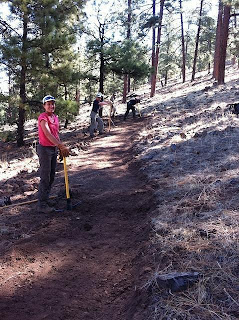
Volunteers who maintain trails and eradicate invasive plants are crucial to our public lands who face an increasing decline in funding and paid crews. These are projects that would likely go undone without volunteer labor; you are needed!
The summer and fall projects will go up on the website during the first week of December.
Monday, September 24, 2012
Taking Care of Your Gear
Now that our project season is drawing to a close, it's a good time to make sure we store our gear properly.
 Sleeping Bag: Take it out of the compression stuff sack and store it in the big cotton sack it came in or in a king-sized pillow case. If it's really dirty, launder it first using a special soap like Nikwax tech wash. Use a front-loading commercial washer to prevent the damaging action of the agitator in top loading machines, turn it inside-out and select a cold gentle cycle. Run it through the rinse cycle again after it's finished to remove any extra soap. Dry it in a large commercial-sized dryer on a low-heat setting. Use tennis balls in the dryer to plump up down bags or take it out of the drier every 20 minutes and manually move the down clumps to break them apart. Dry until the bag is fluffy. Leave it out for a couple of days to finish drying completely, and then store it as above.
Hydration-system: Rinse thoroughly and wash with hot soapy water. Use a flexible brush to clean the tubing and a bottle brush in the bladder. Create a bleach solution by putting a few drops of bleach in a quart of water and let it sit in your bladder and tube for awhile. Dry thoroughly by draining the hose completely and hanging the bladder with a clean towel stuffed inside. You can also store yoursystem in the freezer until your next trip if you have room.
 Water filter: Using clean water, rinse all parts of your filter thoroughly. Use a flexible brush to clean the hoses. If your filter can be backwashed, run clean water through it,and then sanitize with a weak bleach solution and let dry completely. If you have a ceramic filter, scrub gently with a clean scrubby and sanitize with a weak bleach solution by pumping the solution through the filter. Dry completely before storing.
 Tent: Shake out your tent and make sure it is completely dry. If it's really dirty, you might need to clean it by setting it up and hosing it down. Use a soapy sponge to wipe the walls and floor and rinse thoroughly. Make sure poles are sand and dirt free. After it's dry, store loosely in a large pillowcase.
 Hiking Boots: Brush off boots with a stiff brush. If needed, rinse with clean water while brushing. Dry completely out of direct sunlight and away from heat sources (this might cause them to shrink or soles to melt). After dry, put some baking soda inside to absorb odors and stuff with newspaper. If the leather parts are looking dry, moisturize your boots with special products to prevent cracks (consult your boots manufacturer for recommended product). Store them in a cool dark place until your next adventure.
Take care of your gear so it will be ready the next time you are heading out the door to explore wild places!
Sleeping Bag: Take it out of the compression stuff sack and store it in the big cotton sack it came in or in a king-sized pillow case. If it's really dirty, launder it first using a special soap like Nikwax tech wash. Use a front-loading commercial washer to prevent the damaging action of the agitator in top loading machines, turn it inside-out and select a cold gentle cycle. Run it through the rinse cycle again after it's finished to remove any extra soap. Dry it in a large commercial-sized dryer on a low-heat setting. Use tennis balls in the dryer to plump up down bags or take it out of the drier every 20 minutes and manually move the down clumps to break them apart. Dry until the bag is fluffy. Leave it out for a couple of days to finish drying completely, and then store it as above.Hydration-system: Rinse thoroughly and wash with hot soapy water. Use a flexible brush to clean the tubing and a bottle brush in the bladder. Create a bleach solution by putting a few drops of bleach in a quart of water and let it sit in your bladder and tube for awhile. Dry thoroughly by draining the hose completely and hanging the bladder with a clean towel stuffed inside. You can also store yoursystem in the freezer until your next trip if you have room.
 Water filter: Using clean water, rinse all parts of your filter thoroughly. Use a flexible brush to clean the hoses. If your filter can be backwashed, run clean water through it,and then sanitize with a weak bleach solution and let dry completely. If you have a ceramic filter, scrub gently with a clean scrubby and sanitize with a weak bleach solution by pumping the solution through the filter. Dry completely before storing.Tent: Shake out your tent and make sure it is completely dry. If it's really dirty, you might need to clean it by setting it up and hosing it down. Use a soapy sponge to wipe the walls and floor and rinse thoroughly. Make sure poles are sand and dirt free. After it's dry, store loosely in a large pillowcase.Hiking Boots: Brush off boots with a stiff brush. If needed, rinse with clean water while brushing. Dry completely out of direct sunlight and away from heat sources (this might cause them to shrink or soles to melt). After dry, put some baking soda inside to absorb odors and stuff with newspaper. If the leather parts are looking dry, moisturize your boots with special products to prevent cracks (consult your boots manufacturer for recommended product). Store them in a cool dark place until your next adventure.
Take care of your gear so it will be ready the next time you are heading out the door to explore wild places!
Friday, September 14, 2012
Reenie and Jack are Back
Reenie and Jack Knudson are Wilderness Volunteer's participants that did a month-long journey in the Boundary Waters Canoe Area Wilderness this summer, and they recruited friends to donate money to Wilderness Volunteers based upon the number of portages they did during the trip. We received $600 in donations in their honor. Congratulations and thanks to Jack and Reenie for their successful trip and support!
 Here is a short report from Reenie about their trip:
Epic is a good word for the trip! We battled flood waters all the way, sometimes stuck in a camp because we couldn't get anywhere near the portage entry; we did portages knee deep in raging waters, fought our way up rapids that at times seemed determined to push us back over huge boulders, and sheltered from about 18 inches of rain. It was without a doubt the most difficult BW trip we've taken. However nature in all her fury and beauty was there to admire, and I've never seen such wildflowers. 135 miles, 28 portages.
I can't wait to hear what their next adventure will be!
Friday, September 07, 2012
Grand Staircase-Escalante Awaits...
In September 1996, President Bill Clinton established the Grand Staircase-Escalante National Monument by reading a Presidential Proclamation at the rim of the Grand Canyon. I was there, standing 20 feet in front of the President, hyperventilating with excitement. In my 20 years as an activist in the environmental community, being at that event was one of the highlights of my career.
This year, Wilderness Volunteers' annual service project, an ongoing cooperative effort to remove invasive Russian olive trees from the Escalante River corridor, will be in the field just a few days after the 16th anniversary of the National Monument's establishment.
Because of my affinity for the area, and in the national interest of these magnificent public lands, I've co-led several service projects in this area...and it keeps calling me back year after year! With it's deep redrock canyons, ribbons of precious riparian waterways, and vastness beyond the visible, one could explore (and many do) this area in a lifetime and still be enchanted by both new nooks and crevices and old familiar haunts.
 If you've got some free time this early Fall, September 23-29, there is still space remaining to join our group on a backpacking adventure you'll never forget. See Grand Staircase-Escalante National Monument on the Wilderness Volunteers site to sign up. It may be one of the better decisions you'll ever make!
This year, Wilderness Volunteers' annual service project, an ongoing cooperative effort to remove invasive Russian olive trees from the Escalante River corridor, will be in the field just a few days after the 16th anniversary of the National Monument's establishment.
Because of my affinity for the area, and in the national interest of these magnificent public lands, I've co-led several service projects in this area...and it keeps calling me back year after year! With it's deep redrock canyons, ribbons of precious riparian waterways, and vastness beyond the visible, one could explore (and many do) this area in a lifetime and still be enchanted by both new nooks and crevices and old familiar haunts.
Tuesday, August 14, 2012
Quote of the Day

Occoquan Bay Nat'l Wildlife Refuge, VA (2012)
"Nature abhors a vacuum, and if I can only walk with sufficient carelessness I am sure to be filled." - Henry David Thoreau
Monday, July 23, 2012
Building the Continental Divide Trail - WV Style!
Volunteer and blogger Rob Wilbourn tells his story in words and photos from his recent service adventure in the Gila National Forest, west-central New Mexico. You can read and see his post here. Special thanks to Rob for letting us cross-post, and thanks to all volunteers spending time out on trails and other service projects in 2012!

Subscribe to:
Posts (Atom)


