Tuesday, January 19, 2016

Reflections on the Retirement of a Favorite National Forest Partner


Below Wilderness Volunteers leader Kathleen Worley reflects on the retirement of Keith Waterfall, a long serving agency contact in the Inyo National Forest.  While Keith may have moved on, Kathleen is leading another great project in the Inyo NF in 2016, this time at Lake Ediza in the Ansel Adams Wilderness.
A WV crew moving logs in the Inyo National Forest .
 Keith Waterfall was the ranger in charge of the first Wilderness Volunteers trip I ever led, along with Bill Olmsted, to the Hilton Lakes in the Eastern Sierra.  He partnered with WV to set up projects in the Little Lakes Valley, at Lamark Lakes, Upper Pine Lake and Honeymoon Lake, Gem Lakes, various places above Lake Sabrina, and up Big Pine Creek in the Seven Lakes Basin below the Palisades Glacier. On that first trip he drove up from his office in Bishop to meet us at the trailhead and hike in with us to show us the project.  He arranged for packers to take in our supplies, with all our food sealed in big bear barrels that looked like oil drums (not the sleek sliver bear boxes we use now). 

Building the causeway
Our task was to build a long causeway through a meadow being trampled by packhorses on their way to Davis Lake.  A great two-man trail crew, John and Eric, supervised our work.  We hauled logs to mark the sides of the causeway, stripped off the bark, gathered rocks, laid them inside the log rails and crushed them with rock hammers, large and small.  We had a great crew. Carol got up early and made coffee every morning.  Joel had every gadget known to mankind, so we connected via radio during the free day, one group atop a mountain and the other at the edge of a waterfall.  Amy swam out to the island on Davis Lake at lunch while the rest of us watched the week-long progress of a fire high up in a granite bowl above us.  John came to my rescue when bears returned to camp in the middle of the night after breaking into one of the food barrels earlier in the day.  They’d eaten or carried off most of that night’s dinner, but we managed to improvise something; for the rest of the week people returned from trips into the woods carrying tooth-dented cans of tuna.

Not all trips Keith set up were quite as memorable, but there was always something strange and wonderful.  He chose campsites with amazing views and a good spot for a kitchen.  He found us places to camp the night before each trip and chose great packers to take us in and back out again.
Volunteer Michelle Collins "holding up a rock" on the 2013 Bishop Pass project
Some projects were more fun than others but all felt worth doing.  We had a great time destroying all trace of the former trail over Bishop Pass.  Though a new trail had been constructed, people coming down the pass could see the old one and were tempted to take it, since it looked shorter and less steep, but it passed under an active glacial moraine that could at any moment roll giant rocks onto unsuspecting hikers.  We got to roll many a rock ourselves, obliterating all evidence of the former pathway.  We also attempted to obliterate all non-natural traces of a former private lodge in the Seven Lakes Basin.  We filled and carried bags of cement from the foundation down the trail to a point above one of the lakes where we could dump the cement into the water. At one point, a woman in a pink inflatable boat rowed across the lake to find out what was happening, threatening to report us to the forest service.  She didn’t know what to make of the fact that the people who were doing the dumping were in fact forest service employees.  We cleaned campsites, got rid of fire rings, built a new trail at Gem Lakes, built checks and steps above Sailor Lake on the way to Hungry Packer and Midnight. We got to visit Heidi’s house, the remains of what had been built for the High Sierra filming of Heidi. This past summer, I joined Misha Kokotovic for the leader training trip at Honeymoon Lake and walked on the stone pathway above the lake created by the WV crew Ron Harton and I had led there many years before.  
Leader trainees Bobbie Morrison and Dave Marancik on the 13 year old stone pathway built by an earlier WV crew.

Tools packed by Keith
Keith always sent us out with great trail crews, though the crews had fewer members as forest service budgets diminished.  He did his best to find worthwhile projects we could accomplish successfully, knowing that WV crews are capable of more than might be expected of others.  We worked with Student Conservation Association interns, with Friends of the Inyo, with volunteer camp hosts, with back- country rangers, with trail crews and on our own.  Now that Keith has retired, we don’t know what will happen exactly.  The Forest Service has decided that the Inyo National Forest can cutback on trail crews and back-country rangers, so they will need volunteers more than ever, and yet there may be less staff to identify and/or supervise projects. (Editor's note: The 2016 Inyo project at Lake Ediza is being planned with the Mammoth Lakes office instead of Bishop office). I will miss the yearly conversations I had with Keith about where we might go, what we might do, why some trips filled and others didn’t and what we might do about that.  I will miss meeting him at the office in Bishop where I would transfer all the food from bags and coolers into the sleek silver bear boxes that packers would carry up for us and that no bears ever managed to open.

On behalf of WV, I extend many, many thanks to Keith Waterfall for being one of our longest-term partners. His last name seemed so perfect for a man who was so well fitted for his position that we sometimes wondered whether it was a name he had acquired rather than one he was born with. In any case, it suited him as perfectly as he suited his job. May it continue to connect him with wild places during his retirement. Keep in touch, Keith. We’ll miss you.  

Kathleen Worley grew up in Reno, Nevada, which perhaps explains her love of the high desert as well as the granite spires and crystal clear lakes of the Eastern Sierra Nevada. She has led more than 30 projects with Wilderness Volunteers in Nevada, Utah, Idaho, Oregon, California, and Hawaii. She recently retired from teaching theatre at Reed College in Portland, OR.

Wednesday, January 13, 2016

Backcountry Water Treatment Options


While recent research has concluded that backcountry water sources (especially those at higher elevations) are cleaner than once thought, it is impossible to tell which water sources may be contaminated. Rather than risk serious intestinal discomfort there are many water treatment options available, but which is best? Choosing a water treatment system for backpacking can be a confusing and time consuming process. Below we review the options available and discuss the various pros and cons of each to help you decide.

Pump Filtration:

There are many different pump filtration systems out there. Most work by placing one end in the water you wish to filter and the other in a storage container and then manually pumping the water through the filter. Pump filters utilize a variety of filtration media including ceramic, fiberglass, silica, etc. Membrane filters use thin sheets of material with fine pores; they are relatively easy to clean but clog easily. Depth filters use thick layers of porous media; they can be harder to clean and if the media is cracked the filter is ineffective. Micron size (a measurement of the pore size in the filter media) varies by filter so make sure to select a filter with a micron size that is effective at straining most protozoa and bacteria.

Pros:
  • effective against protozoa and bacteria
  • strains out particulates
  • relatively fast
Cons:
  • not effective against viruses
  • moving parts require maintenance
  • can become clogged
  • pumping too fast may reduce effectiveness of filters
  • weight (varies by system)

Gravity Filters:

Gravity filters work by letting gravity push the water through the filter for you. Generally you fill a large bag with water and hang it from an obliging tree or rock. Some gravity filters come with storage (water filters into another compartment) while some do not.

Pros:
  • lightweight
  • easy to use
  • few moving parts
  • little maintenance required
  • effective against protozoa, bacteria, & cryptosporidium
  • relatively fast
  • good for treating water for large groups
  • strains out particulates
Cons:
  • cost 
  • does not work against viruses
  • puncturing the bag or letting the filter freeze can ruin the system

Filtration Straws:

drinking from stream
Straw type filtration systems work by filtering water as you sip. They are available with or without storage bottles.

Pros:
  • lightweight
  • inexpensive 
  • easy to use
  • effective against protozoa and bacteria
  • little maintenance required
  • strains out particulates
Cons:
  • does not work against viruses
  • for immediate consumption only
  • must be replaced if it becomes clogged

UV purifiers: 

UV systems purify water by exposing microorganisms to UV light for around 90 seconds. The light inactivates microorganisms by disrupting their DNA.

Pros:
  • lightweight
  • effective against protozoa, bacteria, viruses & cryptosporidium
  • does not change the taste of the water
  • good for small bottles of water
  • relatively fast
Cons:
  • requires batteries
  • bulb has a limited life
  • effectiveness is lowered by cloudy water
  • does not strain out particulates

Chemical Treatment: 

Iodine and Chlorine dioxide provide a lightweight option that is useful for treating large amounts of water. Typically tablets are dissolved in water; treatment usually takes between fifteen and thirty minutes depending on the chemicals used. When using chemical treatment it is important to follow the directions on the bottle.

Pros:
  • lightweight & compact
  • inexpensive 
  • iodine is effective against protozoa, bacteria & viruses 
  • chlorine dioxide is effective against protozoa, bacteria, viruses & moderately effective against cryptosporidium 
  • useful for treating large amounts of water at one time
  • great as a backup water treatment option
Cons:
  • water may have a slight taste after treatment
  • tablets/chemicals may become ineffective after their expiration dates
  • cold water (less than ~60F (16C) decreases the effectiveness of the treatment and requires longer treatment time
  • some people are allergic to iodine or shouldn't use it due to medical conditions
  • does not strain out particulates 

Boiling:

Bringing your water temperature up to 212F (100C) is one of the simplest water treatment options.

Pros:
  • very effective at killing all microorganisms
Cons:
  • slow
  • requires fuel & a fire
  • not suitable for large amounts of water
  • higher altitudes requires additional boiling time as water boils at a lower temperature 
  • does not strain out particulates

More information:


Tuesday, December 01, 2015

2015 Wilderness Volunteers Photo Contest Winners

Wilderness Volunteers is pleased to announce the winning entries from the 2015 Wilderness Volunteers Photo Contest, sponsored by Keen Footwear and Leki. We received more than 200 entries and there were so many fantastic photos, picking a winner was seriously hard work.

The grand prize winner for best photo is Aidalicia Swertferger, who has won a certificate for a brand new pair of Keen boots, a pair of Leki Trekking poles, and some Wilderness Volunteers gear.

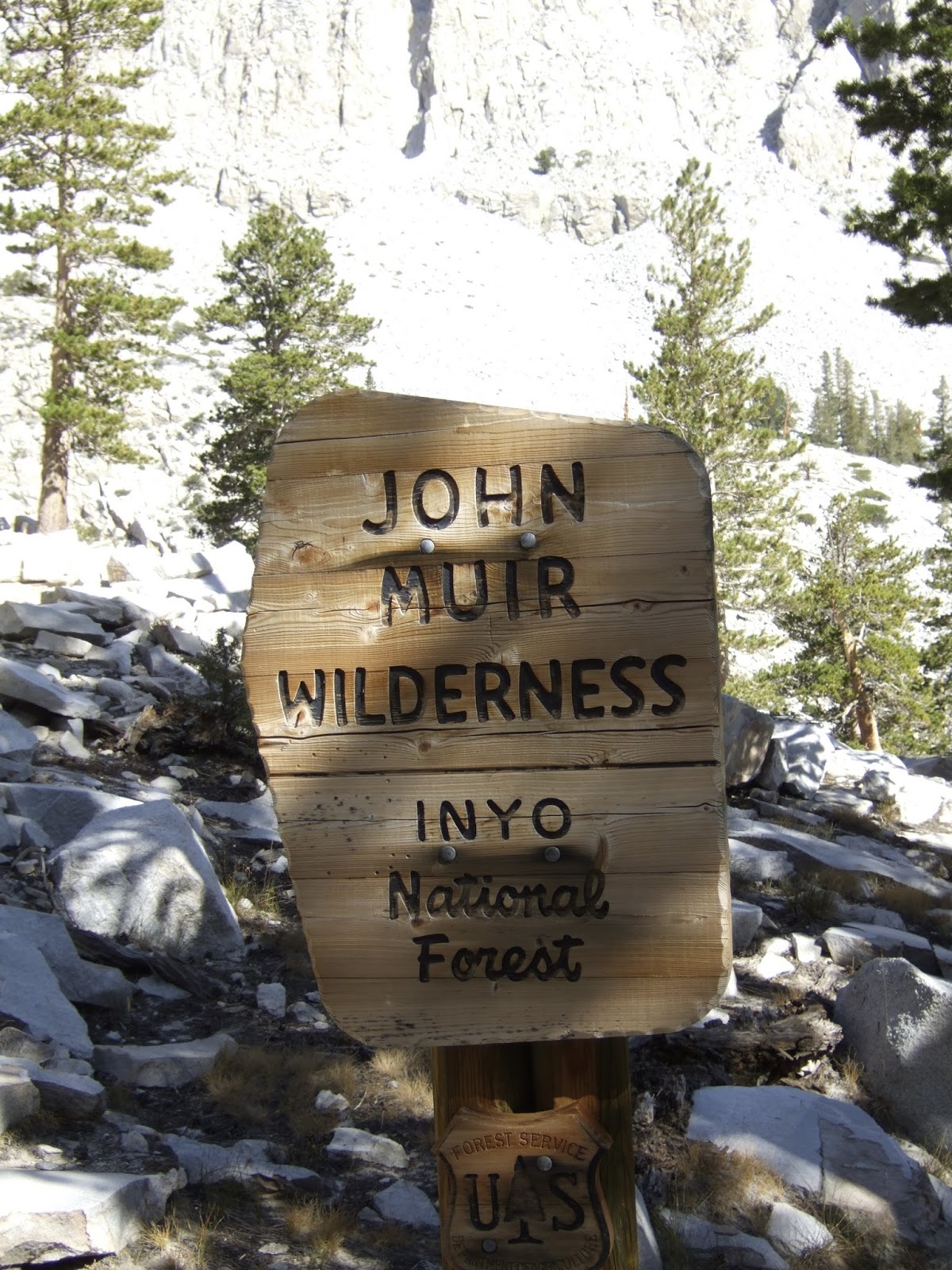
Aidalicia took this photo on the John Muir Wilderness service project in the Inyo National Forest.


The best Landscape photo winner is Kenneth Willis. who has won a certificate for a brand new pair of Keen boots and a pair of Leki Trekking poles.

Kenneth took this photo on the Siskiyou Wilderness service project in the Six Rivers National Forest.


The best Wildlife photo winner is Elle Kiznyte. who has won a certificate for a brand new pair of Keen boots and a pair of Leki Trekking poles.

Elle took this photo on the Elwha River restoration project in Olympic National Park.


The best Hard at Work photo winner is Beth Haynes. who has won a certificate for a brand new pair of Keen boots and a pair of Leki Trekking poles.

Beth took this photo on the Wild and Scenic Salmon River service trip in the Salmon-Challis National Forest.


You can see the rest of our great 2015 photo contest entries as well as photos from just about every 2015 service project online in the Wilderness Volunteers photo gallery.

Don't forget to bring your camera with you on your next service project so you are ready for the 2016 Wilderness Volunteers photo contest!

Monday, November 16, 2015

A look into the Joshua Tree National Park service project

Wilderness Volunteers hosted our first service project with Joshua Tree National Park last month and we were able to help their trail crew finish a needed project refinishing the cholla cactus garden trail  and making it more accessible to visitors.

Volunteer Tom Coroneos documented his experience on his 18th WV project and created this lovely video. Take a look and hopefully you can join us next year when WV returns to Joshua Tree NP in 2016.


Joshua Tree Wilderness Volunteers 2015 from Tom Coroneos on Vimeo.

The full 2016 schedule will be released in early December. Spring projects are available right now on the WV website.

Thursday, November 05, 2015

Equipment Spotlight: Henry Shires Tarptent

After years with a heavier tent I recently picked up a Henry Shires Double Rainbow Tarptent. I had heard good things about the Tarptent - the low cost and weight (a mere 2 lbs and 10 oz) really made it look great for those longer backpacking trips. After spending three weeks in the tent this summer, I am thoroughly impressed by its simplicity and spaciousness.


The Double Rainbow sets up easily and quickly with only one carbon fiber pole. On average it only took me about 3 minutes to set it up no matter the terrain. It sleeps two, has two zippered mesh doors with vestibules for keeping boots and other gear dry. I did miss having a net gear loft above, but the other features of the tent more than make up for it.


The double vestibules and mesh sides made it easy to open the tent up for a cool night breeze and the mesh netting kept out even the tiniest no-see-ums. The tent was subjected to some pretty significant wind gusts and held up with no problems. The interior stayed dry through a number of rainstorms with the exception of one occasion when a bag was placed too close to the wall on the interior (user error) resulting in some water dripping off the top layer of the tent through the mesh section near the floor.
        

From sandy beaches in Hawaii to rain forests in Alaska this tent has been a pleasure to use.

You can find out more about the Henry Shires Double Rainbow and other Tarptents here.

Tuesday, October 27, 2015

Announcing the 2015 Wilderness Volunteers Photo Contest

The 2015 season is nearly over, so let's celebrate all of the great work our trip participants helped WV accomplish this year by awarding some great prizes for a few fantastic photos!

A few of our great entries from last year:


Enter your favorite WV project photos by uploading your selections to the WV gallery in these categories: Landscapes, Wildlife, and Hard at Work.

Please add a description for each photo as well as your name and what project it was taken on.

Winners will be selected for each category as well as a grand prize winner for best photo. 

Winners will receive a voucher for a brand new pair of KEENs, a set of Leki trekking poles, and some other great gear.  You can enter as many photos as you like, just be sure to do so before the deadline on November 30th! 

Last Years Winners:

#1 Ulrich Boegli, Glacier National Park

#2 Eric Mak, Boundary Waters Canoe Area Wilderness

#3 Randy Kahn, San Rafael Swell

Wednesday, October 21, 2015

Wilderness and Littering

Imagine hiking five miles into a wooded wilderness and finding a beautiful stream. Imagine sitting and listening to the sound of the stream rushing over the rocks, the breeze blowing through the trees, the birds singing, and the sense of peace and solitude you would feel.


Now imagine the same setting but with empty water bottles, candy bar wrappers, plastic baggies, and clumps of toilet paper scattered across the landscape.
  
Litter effects our perception and our appreciation of wild places. It can take away from an otherwise beautiful experience and negatively influence our opinion of and our regard for a place. Would you plan a return trip or encourage others to visit a remote campsite you had visited and found covered in garbage?

Abandoned crab pots on a beach in Alaska
macro trash
Lake litter picked up in the Boundary Waters, MN
Trash collected in Mt. Hood, OR
Litter also endangers wildlife in a variety of ways. An animal may ingest plastic from a food wrapper, become entangled in fishing line, or get stuck in a can or bottle leading to injury or death. Litter that contains scraps of food can draw wildlife to areas where people camp and habituate them to search for food in these areas. This behavior increases the chance of a negative human-wildlife interaction that often end with severe consequences for wildlife.  

Where does all this litter come from?

People may litter intentionally for a variety of reasons including misinformation (these apple cores are natural/biodegradable), laziness (it’s too much trouble to dispose of trash properly), and entitlement (somebody else will throw it away for me). In the backcountry there are additional reasons people may be more inclined to toss their garbage rather than pack it out including the added weight of the trash, unpleasant odors, the distance to the nearest trash receptacle, and a lack of a feeling of ownership or pride in our public lands.

Litter may also be unintentional. Unintentional littering in the backcountry typically involves containers and other trash that falls out of a backpack/pocket or that is created when wildlife get into food/trash and disburse it. In high use areas even unintentional littering can lead to the buildup of significant amounts of trash over time.

Cleaning up a beach on Admiralty Island, AK
08232013 101135 AFTER PICKING UP TRASH AROUND THE LAKE
Collecting trash around a lake - Frank Church River of No Return Wilderness, ID

What you can do to help prevent litter on our public lands:
  • Follow Leave No Trace© practices. Wilderness Volunteers promotes Leave No Trace ethics and is a proud supporter and non-profit partner of the Leave No Trace Center for Outdoor Ethics.
o   Plan Ahead and Prepare

o   Travel and Camp on Durable Surfaces
o   Dispose of Waste Properly

o   Leave What You Find
o   Minimize Campfire Impacts

o   Respect Wildlife
o   Be Considerate of Other Visitors
  • Educate others about littering and proper waste disposal. Increased awareness about litter and its harmful effects is critical component of changing littering behavior.
  • Plan adequately for bad weather and other contingencies.  Effective planning will reduce the chance that Leave No Trace practices will end up being sacrificed for safety.
  • Buy food products for camping with the least amount of packaging possible. Less packaging means less to carry and less to pack back out.  
  • Dispose of all waste properly.
o   Apple cores, banana peels, fruit pits, pistachio shells, sunflower seed hulls, etc. aren’t native to most environments and should packed out and disposed of with other trash.
o   Toilet paper is not “natural” or easily biodegradable and should also be packed out. Buried toilet paper can be easily dug up by wildlife and in some areas make take years to degrade. Burning toilet paper incorrectly can damage nearby flora and in the wrong conditions could start a forest fire.
  • Pick up litter that you find and pack it out when possible. Removing litter that someone left before you not only cleans up the area, it reduces the chance that somebody else will litter in the same area again.
  • Keep a resealable bag with you to store your personal trash. Having a handy place to put your trash makes proper disposal easy and a resealable bag helps keep odors contained.  
  • Make sure to secure trash at night and when away from camp. The method of securing your trash will often depend on the area (bear boxes, hanging, etc.) but securing your trash will prevent wildlife from getting into it.
  • Secure your food appropriately. Again methods may vary depending on the area but never leave food unsecured and unattended even for short amounts of time.
  • Double check your campsite for loose articles and micro-trash before departing. Even if you are careful small items such as tent stakes, socks or small bits of food wrappers are often unintentionally left behind.   
WV trash clean up in Mt. Hood, OR

Wilderness Volunteers follows Leave No Trace practices (c) Leave No Trace Center for Outdoor Ethics: www.LNT.org