Showing posts with label camping. Show all posts

Monday, April 11, 2016

Lamzac Lounge Chairs

If you are wishing your camp chair was a little more comfortable you might want to check out the new Lamzac Hangout chair.
Made from ripstop nylon they set up in just a few seconds. Take down is just as easy and the sacks are designed to fold up compactly. A cross between a beanbag chair, a hammock and a air mattress they are designed to hold up to 440 pounds so you can share your newfound comfort with a friend or two.


At 2.6 pounds the chair is a bit on the heavy side for backpacking trips where weight is a consideration but for car camping it could be a great addition. The ripstop nylon construction is resistant to rips and tears but probably shouldn't be used near campfires as an errant ember could easily deflate your chair and patching the hole could be tricky.

The chair is being sold soon by the Dutch company Fatboy USA. They will come in six different colors; you can find out more about them here.


Do you have one? Have you field tested it? Please let us know what you thought in the comments below.

Tuesday, January 19, 2016

Reflections on the Retirement of a Favorite National Forest Partner


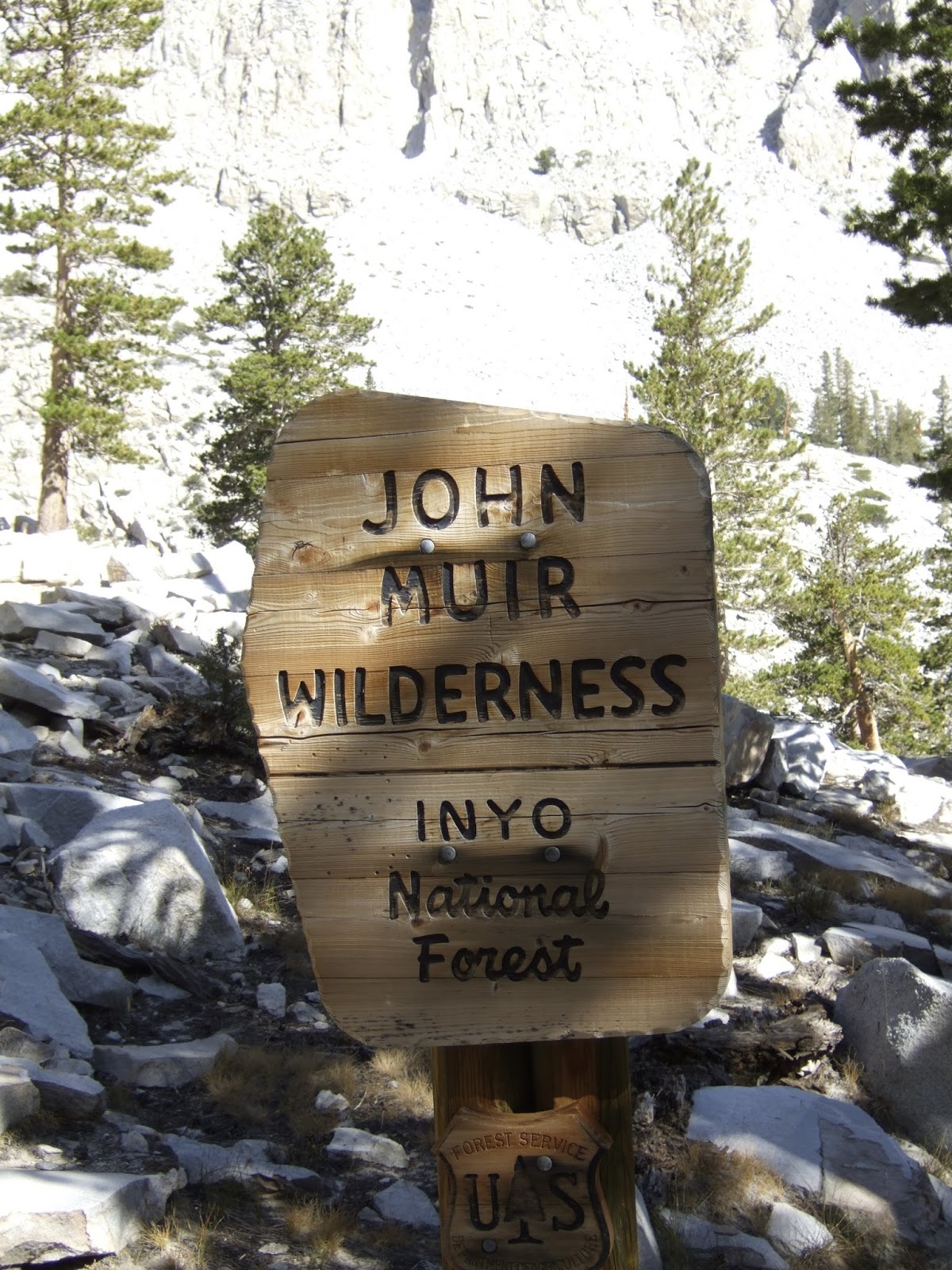
Below Wilderness Volunteers leader Kathleen Worley reflects on the retirement of Keith Waterfall, a long serving agency contact in the Inyo National Forest.  While Keith may have moved on, Kathleen is leading another great project in the Inyo NF in 2016, this time at Lake Ediza in the Ansel Adams Wilderness.
A WV crew moving logs in the Inyo National Forest .
 Keith Waterfall was the ranger in charge of the first Wilderness Volunteers trip I ever led, along with Bill Olmsted, to the Hilton Lakes in the Eastern Sierra.  He partnered with WV to set up projects in the Little Lakes Valley, at Lamark Lakes, Upper Pine Lake and Honeymoon Lake, Gem Lakes, various places above Lake Sabrina, and up Big Pine Creek in the Seven Lakes Basin below the Palisades Glacier. On that first trip he drove up from his office in Bishop to meet us at the trailhead and hike in with us to show us the project.  He arranged for packers to take in our supplies, with all our food sealed in big bear barrels that looked like oil drums (not the sleek sliver bear boxes we use now). 

Building the causeway
Our task was to build a long causeway through a meadow being trampled by packhorses on their way to Davis Lake.  A great two-man trail crew, John and Eric, supervised our work.  We hauled logs to mark the sides of the causeway, stripped off the bark, gathered rocks, laid them inside the log rails and crushed them with rock hammers, large and small.  We had a great crew. Carol got up early and made coffee every morning.  Joel had every gadget known to mankind, so we connected via radio during the free day, one group atop a mountain and the other at the edge of a waterfall.  Amy swam out to the island on Davis Lake at lunch while the rest of us watched the week-long progress of a fire high up in a granite bowl above us.  John came to my rescue when bears returned to camp in the middle of the night after breaking into one of the food barrels earlier in the day.  They’d eaten or carried off most of that night’s dinner, but we managed to improvise something; for the rest of the week people returned from trips into the woods carrying tooth-dented cans of tuna.

Not all trips Keith set up were quite as memorable, but there was always something strange and wonderful.  He chose campsites with amazing views and a good spot for a kitchen.  He found us places to camp the night before each trip and chose great packers to take us in and back out again.
Volunteer Michelle Collins "holding up a rock" on the 2013 Bishop Pass project
Some projects were more fun than others but all felt worth doing.  We had a great time destroying all trace of the former trail over Bishop Pass.  Though a new trail had been constructed, people coming down the pass could see the old one and were tempted to take it, since it looked shorter and less steep, but it passed under an active glacial moraine that could at any moment roll giant rocks onto unsuspecting hikers.  We got to roll many a rock ourselves, obliterating all evidence of the former pathway.  We also attempted to obliterate all non-natural traces of a former private lodge in the Seven Lakes Basin.  We filled and carried bags of cement from the foundation down the trail to a point above one of the lakes where we could dump the cement into the water. At one point, a woman in a pink inflatable boat rowed across the lake to find out what was happening, threatening to report us to the forest service.  She didn’t know what to make of the fact that the people who were doing the dumping were in fact forest service employees.  We cleaned campsites, got rid of fire rings, built a new trail at Gem Lakes, built checks and steps above Sailor Lake on the way to Hungry Packer and Midnight. We got to visit Heidi’s house, the remains of what had been built for the High Sierra filming of Heidi. This past summer, I joined Misha Kokotovic for the leader training trip at Honeymoon Lake and walked on the stone pathway above the lake created by the WV crew Ron Harton and I had led there many years before.  
Leader trainees Bobbie Morrison and Dave Marancik on the 13 year old stone pathway built by an earlier WV crew.

Tools packed by Keith
Keith always sent us out with great trail crews, though the crews had fewer members as forest service budgets diminished.  He did his best to find worthwhile projects we could accomplish successfully, knowing that WV crews are capable of more than might be expected of others.  We worked with Student Conservation Association interns, with Friends of the Inyo, with volunteer camp hosts, with back- country rangers, with trail crews and on our own.  Now that Keith has retired, we don’t know what will happen exactly.  The Forest Service has decided that the Inyo National Forest can cutback on trail crews and back-country rangers, so they will need volunteers more than ever, and yet there may be less staff to identify and/or supervise projects. (Editor's note: The 2016 Inyo project at Lake Ediza is being planned with the Mammoth Lakes office instead of Bishop office). I will miss the yearly conversations I had with Keith about where we might go, what we might do, why some trips filled and others didn’t and what we might do about that.  I will miss meeting him at the office in Bishop where I would transfer all the food from bags and coolers into the sleek silver bear boxes that packers would carry up for us and that no bears ever managed to open.

On behalf of WV, I extend many, many thanks to Keith Waterfall for being one of our longest-term partners. His last name seemed so perfect for a man who was so well fitted for his position that we sometimes wondered whether it was a name he had acquired rather than one he was born with. In any case, it suited him as perfectly as he suited his job. May it continue to connect him with wild places during his retirement. Keep in touch, Keith. We’ll miss you.  

Kathleen Worley grew up in Reno, Nevada, which perhaps explains her love of the high desert as well as the granite spires and crystal clear lakes of the Eastern Sierra Nevada. She has led more than 30 projects with Wilderness Volunteers in Nevada, Utah, Idaho, Oregon, California, and Hawaii. She recently retired from teaching theatre at Reed College in Portland, OR.

Monday, November 16, 2015

A look into the Joshua Tree National Park service project

Wilderness Volunteers hosted our first service project with Joshua Tree National Park last month and we were able to help their trail crew finish a needed project refinishing the cholla cactus garden trail  and making it more accessible to visitors.

Volunteer Tom Coroneos documented his experience on his 18th WV project and created this lovely video. Take a look and hopefully you can join us next year when WV returns to Joshua Tree NP in 2016.


Joshua Tree Wilderness Volunteers 2015 from Tom Coroneos on Vimeo.

The full 2016 schedule will be released in early December. Spring projects are available right now on the WV website.

Wednesday, October 21, 2015

Wilderness and Littering

Imagine hiking five miles into a wooded wilderness and finding a beautiful stream. Imagine sitting and listening to the sound of the stream rushing over the rocks, the breeze blowing through the trees, the birds singing, and the sense of peace and solitude you would feel.


Now imagine the same setting but with empty water bottles, candy bar wrappers, plastic baggies, and clumps of toilet paper scattered across the landscape.
  
Litter effects our perception and our appreciation of wild places. It can take away from an otherwise beautiful experience and negatively influence our opinion of and our regard for a place. Would you plan a return trip or encourage others to visit a remote campsite you had visited and found covered in garbage?

Abandoned crab pots on a beach in Alaska
macro trash
Lake litter picked up in the Boundary Waters, MN
Trash collected in Mt. Hood, OR
Litter also endangers wildlife in a variety of ways. An animal may ingest plastic from a food wrapper, become entangled in fishing line, or get stuck in a can or bottle leading to injury or death. Litter that contains scraps of food can draw wildlife to areas where people camp and habituate them to search for food in these areas. This behavior increases the chance of a negative human-wildlife interaction that often end with severe consequences for wildlife.  

Where does all this litter come from?

People may litter intentionally for a variety of reasons including misinformation (these apple cores are natural/biodegradable), laziness (it’s too much trouble to dispose of trash properly), and entitlement (somebody else will throw it away for me). In the backcountry there are additional reasons people may be more inclined to toss their garbage rather than pack it out including the added weight of the trash, unpleasant odors, the distance to the nearest trash receptacle, and a lack of a feeling of ownership or pride in our public lands.

Litter may also be unintentional. Unintentional littering in the backcountry typically involves containers and other trash that falls out of a backpack/pocket or that is created when wildlife get into food/trash and disburse it. In high use areas even unintentional littering can lead to the buildup of significant amounts of trash over time.

Cleaning up a beach on Admiralty Island, AK
08232013 101135 AFTER PICKING UP TRASH AROUND THE LAKE
Collecting trash around a lake - Frank Church River of No Return Wilderness, ID

What you can do to help prevent litter on our public lands:
  • Follow Leave No Trace© practices. Wilderness Volunteers promotes Leave No Trace ethics and is a proud supporter and non-profit partner of the Leave No Trace Center for Outdoor Ethics.
o   Plan Ahead and Prepare
o   Travel and Camp on Durable Surfaces
o   Dispose of Waste Properly
o   Leave What You Find
o   Minimize Campfire Impacts
o   Respect Wildlife
o   Be Considerate of Other Visitors
  • Educate others about littering and proper waste disposal. Increased awareness about litter and its harmful effects is critical component of changing littering behavior.
  • Plan adequately for bad weather and other contingencies.  Effective planning will reduce the chance that Leave No Trace practices will end up being sacrificed for safety.
  • Buy food products for camping with the least amount of packaging possible. Less packaging means less to carry and less to pack back out.  
  • Dispose of all waste properly.
o   Apple cores, banana peels, fruit pits, pistachio shells, sunflower seed hulls, etc. aren’t native to most environments and should packed out and disposed of with other trash.
o   Toilet paper is not “natural” or easily biodegradable and should also be packed out. Buried toilet paper can be easily dug up by wildlife and in some areas make take years to degrade. Burning toilet paper incorrectly can damage nearby flora and in the wrong conditions could start a forest fire.
  • Pick up litter that you find and pack it out when possible. Removing litter that someone left before you not only cleans up the area, it reduces the chance that somebody else will litter in the same area again.
  • Keep a resealable bag with you to store your personal trash. Having a handy place to put your trash makes proper disposal easy and a resealable bag helps keep odors contained.  
  • Make sure to secure trash at night and when away from camp. The method of securing your trash will often depend on the area (bear boxes, hanging, etc.) but securing your trash will prevent wildlife from getting into it.
  • Secure your food appropriately. Again methods may vary depending on the area but never leave food unsecured and unattended even for short amounts of time.
  • Double check your campsite for loose articles and micro-trash before departing. Even if you are careful small items such as tent stakes, socks or small bits of food wrappers are often unintentionally left behind.   
WV trash clean up in Mt. Hood, OR

Wilderness Volunteers follows Leave No Trace practices (c) Leave No Trace Center for Outdoor Ethics: www.LNT.org


Thursday, July 09, 2015

Exploring Bighorn Crags in the Frank Church River of No Return Wilderness


Stretching across six(!) National Forests, is the incomparable Frank Church River of No Return Wilderness. At 2.367 million acres, “the Frank” is the second largest protected wilderness area in the contiguous United States, just behind Death Valley. Established in 1980 as the River of No Return Wilderness, it was renamed after Senator Frank Church, who played a key lead role in passing 1964’s landmark Wilderness Act.

Coursing through this picturesque land is the Wild and Scenic Salmon River, named the River of No Return by pioneers due to its high speed and one-way only travel. Today the Salmon is one of the most popular areas for experiencing a whitewater thrill, with runs of both the middle fork and main fork barreling down deep canyons with gorgeous scenery.  The river is fast as it drops steeply through towering canyons 1000’ deeper than the Grand Canyon.

High above lies the remote and jagged Bighorn Crags, a rugged collection of granite peaks and alpine lakes offering spectacular vistas for which it is widely known.  Recreation opportunities abound here, with incredible fishing for native salmon and steelhead trout, miles upon miles of hiking, and a photographer’s dream of sweeping views surrounded by rugged peaks in this undeveloped forest. 

Indeed, the area does see high traffic (for Idaho standards anyways) and our service project, set for August 15 - 22, is assisting wilderness rangers on the North Fork Ranger District with needed trail maintenance on the Mirror Lake Trail. This will include building a turnpike through a bog, creating and installing log waterbars, and retreading a section of trail. We’ll start with a 9. 5 mile scenic backpack via Birdbill Lake to a picturesque base camp at Mirror Lake. The Forest Service will provide pack animals to carry our group food, commissary and tools. Free day activities might include day hiking to Ship Island Lake, Big Clear Lake basin or other remote lakes or peaks, picking and eating in season huckleberry, fishing, swimming or just relaxing beside alpine lakes & streams.

 
Feel free to check out pictures from previous years of WV projects over on the gallery to see some examples of this incredible area. Click here to learn more and signup for the Bighorn Crags, FCRONR Wilderness service project, August 15 - 22!


Tuesday, April 28, 2015

Project Videos: Pinnacles NP, Mojave NP, Pt. Reyes NS


Veteran Wilderness Volunteer Tom Coroneos has done more than 20 projects giving back all over the country! And beyond being an excellent volunteer, he's terrific at making movies, having put together many great videos, including several about his recent WV projects! Take a gander at Tom's excellent work below:

Pinnacles National Park 2015

Mojave National Preserve 2015

Pt. Reyes National Seashore 2014

Mojave National Preserve 2014

And Tom is currently out in the field at the Pt. Reyes National Seashore project, so we can likely count on another video coming our way soon. Thanks Tom!


Friday, February 20, 2015

Canyon Country Adventures Await


In just a few short weeks, the 2015 Wilderness Volunteers project season will kick off with a full trip to the Mojave. Get out of the cold and into the wilderness with projects across the southwest (and Hawaii), such as these projects on the Colorado Plateau:

K04Mike in slot canyon

Moab Arches and Towers, Moab BLM, Utah

Moab is a paradise for hikers, with many landforms unparalleled in the world.  Our project there runs the week of April 19th - 25th whre we'll work on the trails to arches and views of the Colorado River and Fisher Towers.

San Rafael Swell, Sids Mountain WSA, Price BLM, Utah

The San Rafael Swell is one of most striking areas in all of the wild western United States.  With slot canyons, gorges, mesas, desert streams and so much more. This is an area all wilderness lovers should explore, at least once. Read more about the April 19-25th trip in this blog post and sign up for the adventure on the website.

Escalante River, Glen Canyon NRA, Utah
This project is the continuation of a fourteen year project removing invasive Russian olive trees from the Escalante River watershed. The work is needed and this rugged landscape must be experienced. Join us April 26 - May 2.

Hammond Canyon, Manti-La Sal National Forest, Utah


Join WV out in Canyon Country from May 10-16th for a trail maintenance project amongst fascinating ancient history and scenic beauty. This extremely underrated area promises to impress you and reward your stewardship efforts.

North Rim, Kaibab National Forest, Arizona
When you think of canyons, there is one in particular that stands out - the Grand Canyon. Join us in northern Arizona in an area outside of the National Park and spend the week working from the Kaibab Plateau brushing trails that lead to the North Canyon. Read more and signup up for the WV service project on the North Rim, Kaibab National Forest, May 24 - 30, 2015.


And more! If you need help deciding which project is right for you, send us an email or give us a call at (928) 255-1128 - we'd love to hear from you.


Friday, January 30, 2015

2014 Photo Contest Winners


We're pleased to announce the winning entries from the 2014 WV Photo Contest, sponsored by Mountainsmith, Sea to Summit, Crazy Creek and Ribz. We received more than 100 submissions, representing the majority of projects we had in the field in 2014. There were so many fantastic photos, picking a winner was very difficult for the sponsoring companies and WV staff.

The grand prize winner was Ulrich Boegli, who has won a place on a 2015 Wilderness Volunteers service project and a Mountainsmith Camera Bag. Ulrich took this photo on the Glacier National Park service project (we'll be back in 2015).
2014 Photo Contest Winner - Taken by Ulrich Boegli in Glacier National Park

Eric Mak was our first runner-up and he receives a prize pack from Sea to Summit and a Longback chair from Crazy Creek. Eric took this trip on his 2014 service project in the Superior National Forest's Boundary Waters Canoe Area.  While both BWCA projects are full this year, you can always join us in  2016.

Eric Mak's beautiful photo from the Boundary Waters Canoe Area in 2014.

Our second runner-up, Randy Kahn, will receive a Ribz Front Pack thanks to his really lovely shot from the San Rafael Reef Wilderness Study Area. We'll be back to the San Rafael Swell area this spring with a a project within the Sids Mountain Wilderness Study Area. Spaces remain available, so come on out and bring your camera!

Randy Kahn's lovely photo from the 2014 San Rafael Reef WSA in Utah

You can see these photos and the other selected 2014 Photo Contest finalists on the WV gallery. There are also photo galleries for just about every service project we ran in 2014.  Take a look around and see what amazing wild lands you want to visit next. And take your camera - we will once again host a photo contest, featuring great prizes from terrific sponsors, in 2015.

Friday, June 13, 2014

Available Summer Adventures


There are still spaces remaining on WV service projects in several outstanding wild places. Here are a few of the places that have spots available to give something back:

Mission Mountains Wilderness, Montana, July 19 - 26

Photo by Tammy Rinaldi, WV Service Project in 2010
The Mission Mountain Wilderness, with its rugged peaks, pristine glacial lakes and mountain streams, is frequently called the American Alps. The Missions feature 225 lakes and its clear waters hold native trout, a high-bred "Cutbow" (which is a cross between the Cutthroat and Rainbow trout), and pike. Its high peaks tower 7000 feet above the valley floor, up to 9280' McDonald Peak. The slopes and valleys are heavily forested, rocky and lush with undergrowth.

This a great trip for everyone, including beginner backpackers, as it's fairly level and we have terrific pack stock support. Our service project will be very useful in helping maintaining these scenic mountain trails after a particularly late snow season this year.  See the project page to learn more and join us in America's Alps.

Frank Church - River of No Return Wilderness, Bighorn Crags, Idaho, August 17 - 23

Photo by Caroline Williams, WV Service Project 2013

Located in west-central Idaho and below the Montana state line, lies the 2.3 million acre Frank Church River of No Return Wilderness Area - the largest wilderness in the United States outside of Alaska. Cutting through it with ferocity is the Wild and Scenic Middle Fork of the Salmon River, called the River of No Return by pioneers. High above the river is the remote, jagged Bighorn Crags area, with outstanding opportunities for hunting, hiking, primitive camping, fishing and whitewater rafting.

Please join us on our service project in this undeveloped and wild land, assisting wilderness rangers from the North Fork Ranger District with trail maintenance on the Ship Island Lake Trail. Our work will include erosion control, reroutes, brushing, and maintaining campsites following a 9 mile backpack to a picturesque base camp at Airplane Lake in the Ship Island Lake basin. 

Mt. Hood Wilderness, Oregon, September 7 - 13

Located twenty miles east of Portland, Oregon, and the northern Willamette River valley, the Mt. Hood
Photo by Sharon Pilot, WV Service Project 2012
National Forest extends south from the strikingly beautiful Columbia River Gorge across more than a million acres of forested mountains, lakes and streams. At its heart lies the imposing figure of Mt. Hood, a dormant volcano with 11 active glaciers, forested slopes and alpine meadows. The Mt. Hood Wilderness follows river drainages to lower elevations, concealing waterfalls and valleys that support an understory of Oregon grape, salal, rhododendron, huckleberries, and an overstory of towering cedars and other moss-covered conifers.


The service project is working with the Mt. Hood NF Fisheries Biology team on a continuing collective to restore and aid salmon habitat recovery along Still Creek and the Salmon River. We'll spend the first part of the week working on stream banks restoring riparian habitat, wetlands and stream-side vegetation by planting native Red cedar, and removing illegal campsites and fire rings as they are encountered. The second half of the week we'll be gathering seeds and berries for direct sewing or later propagation. Opportunities abound for day hiking to area waterfalls and taking in the sites of this classic Pacific Northwest temperate rainforest. This project is great for all experience levels including beginners to car camping and service work.


Thanks for giving something back with Wilderness Volunteers!

Thursday, May 08, 2014

Reduce Condensation in Your Tent

Tips for reducing condensation in your tent from Mountain Safety Research:

Wednesday, January 15, 2014

Interview with Brian Murdock of the Manti-La Sal National Forest

We recently caught up with Brian Murdock, the Recreation, Wilderness & Trails Manager for the Monticello/Moab ranger district of the Manti-La Sal National Forest to talk about our work in the Dark Canyon Wilderness; our next project there is May 11 - 14, 2014.
"The area that I am fortunate to manage is the Dark Canyon Wilderness. I have heard it referred to as the wild heart of the Colorado Plateau and I like that description. I believe one of its most unique qualities is the solitude it offers. As more and more of our wildlands are seeing increasing use, the logistics of getting into the area and the sheer remoteness of the canyon makes use relatively low in the Dark Canyon area. If you want a real wilderness experiences with a good chance of being completely alone and you are prepared, this is the place.
We are always in need of trail work. The wilderness is a dynamic system and keeping trails open and passable is a Herculean task that never ends. Wilderness Volunteers has put a lot of time into helping the US Forest Service remove tamarisk which we finished up in 2013.
Currently the recreation and wilderness staff on our district consists of two full time employees and 5-7 seasonal employees. The reality of our work is that we cannot meet all of the demands we have in managing developed and dispersed recreation, trails (non-motorized and motorized), outfitter and guides, and our winter recreation program on two different mountain ranges (the LA Sals and the Abajo/Elk Ridge) with the staff we have. Volunteers are a necessity if we want to fulfill our management responsibilities and Wilderness Volunteers has been one of our best partners in achieving our wilderness management goals. 
Our most recent projects with Wilderness Volunteers has included two annual trips each year for the past 8 years. In the spring we have conducted tamarisk inventories and removal and in the fall we do cultural inventories of the area. In 2013 we cleared the final tamarisk from the wilderness (that we know about). It was very satisfying to be able to clear all of the springs and wetlands of the invasive trees. I am sure there are still some lurking out there but  Wilderness Volunteers made the Dark Canyon Wilderness a much more natural and wild place with the work they did removing tamarisk. We also conducted a trail project this year in the La Sal mountains with Wilderness Volunteers that was very successful. The enthusiasm of the volunteers is always infectious. I love introducing people to new areas and watching them fall in love with Dark Canyon and the other areas we manage.
You can continue to give back when not on a WV project by educating everyone around you about the importance of public lands and in particular about wilderness. I think a lot of the American public have major misconceptions about wilderness. Having Wilderness Volunteers telling others about their volunteer trips and their accomplishments can go a long way in educating the public about wilderness and its management."


Wednesday, November 20, 2013

Interview with Annette Smits, North Zone Trails Coordinator for the Gila National Forest

We checked in with Annette Smits, the North Zone Trails Coordinator for the Gila National Forest ahead of our returning service project there, June 8 - 14, 2014. We asked Annette about the area, her work and how to help, among a number of other topics.

Tell us about the most unique aspect of the wilderness area that you manage. What draws visitors here?
In my zone (I cover 3 districts of the Gila) we cover 2 wilderness areas-all of the Blue Range and the western half of the Gila Wilderness, as well as General Forest Areas (GFA) and Inventoried Roadless Areas (IRA).

For the Blue Range the most unique feature is likely solitude, I can think of few other areas that give the user a chance to truly get away from it all. We have amazing dark skies, great hunting, and opportunities to catch glimpses of wildlife of all sorts from elk to raccoons or hear wolves howling in the distance.

For the Gila, the biggest draw is that it is one of the original wilderness areas, where Aldo Leopold got some of his inspiration. Where the green fire died in the wolf’s eyes. The western half has extremely rugged terrain that draws people looking for a challenge.

Tell us about the most important types of projects a group of volunteers can do to help in your wild backcountry areas.

Trail work. In my opinion trails bring people into our great public lands and give them the opportunity to experience them and grow to love them. Trail work is hard work in that is very demanding in terms of resources. Trails serve as a means to concentrate use, and reduce impact to natural resources (for example we typically route our trails away from sensitive resources whether cultural or biological). I think if we provide a sound way for people to come out and enjoy our backcountry they will start to love them and want to protect them.

Why do you work with Wilderness Volunteers?

We partner with WV, because we need help. What makes WV such an ideal group to work with is the continuity of leadership, the ease of working with leaders who are already savvy about being out in the woods and leaving no trace, and the general professionalism of Wilderness Volunteers as an organization. 

About the WV service project:

Our projects have been on the Continental Divide Trail (CDT) construction. Currently much of our route of the CDT is on roadways, where non-motorized users are competing for space with trucks and ATVs. For the last few years we have been working on creating a new trail where people can enjoy the panoramic vistas, in the peace and quiet that the Gila is known for. In the still of the forest a user can catch glimpses of herds of elk, bobcats, deer, bears, various birds, coyotes, and other wildlife. It may be a personal bias here, but these things can make for an outstanding trip whether out for the day or on a longer trip. In partnering with WV we are giving more people the chance for these experiences. The way in which WV operates make them an extremely easy group to work with. There is always going to be set up time with any project, but due to good planning and working with the same leadership every time the amount of work that goes into a WV trip is much less than what is generally expected with volunteer groups in general. Working with WV, all that I really need to do is show up with tools, safety equipment, and water the rest of the in and out day-to-day logistical stuff is covered by WV. Any trip that is being coordinated by WV is one that as I can count on as being a productive week as a land manager, and an enjoyable week on a personal level.

How can folks continue to give back to your area when not on a WV project?

Being our eyes and ears out in the field. I cover about 1½  million acres in my zone, so needless to say there are a lot of things that I don’t know about as far as day to day stuff. Though we may or may not be able to deal
with the issue rapidly, the sort of things that are very helpful for us to know about are:
·        Water and spring conditions (or lack thereof)- this is the most common question I get asked, and being in the southwest water is almost always scarce. If at least I could say as an example- as of June 18th there was water in spring x. At least it’s a bit more certain than a guess.
·        Noxious weeds- this is starting to become more of an issue in our areas. If we have the opportunity to find and remove these outcropping while they are still small we have a much better chance of removing them.
·        Trail conditions- not necessarily a single tree down, but if there are excessive numbers of them down, trail has extreme washouts, if the trail is very difficult to find, or anything that looks out of the ordinary out there. 

Tuesday, November 19, 2013

Photo from the Field: Superstition Wilderness by Sarah Slover

Photo from the Field: Taken by Sarah Slover on WV's spring service project in the Superstition Wilderness of Arizona's Tonto National Forest in March 2012.

You can sign up now for WV's 2014 service project in the Superstition Wilderness, as well as many others at http://www.wildernessvolunteers.org/php/projects.php


Monday, November 11, 2013

Photo from the Field: King Range NCA by Eric Mak

Sharing photos from the field has been a regular feature from the WV facebook page and we'll now be sharing on the blog as well!  If you have a favorite photo that you'd like us to feature, please let us know by dropping a note to info@wildernessvolunteers.org.

This week's photo from the field is from WV's first service project on Northern California's coastal King Range Conservation Area, taken by Eric Mak.  The project, which ran from April 20-27, featured coastal hiking, trail maintenance and a day of beach cleanup as pictured below.

WV will return to King Range this spring and you can sign up for that project and more on the project page.


You can find more of Eric's terrific photographs and photos from many of WV's service project in our photo gallery.


Wednesday, October 30, 2013

A Transformational Trip To Escalante by Rebecca Glucklich

Yes, I am “that girl” who decided to go to Utah after reading Aron Ralston’s “Between a Rock and a Hard Place” and watching 127 Hours – I was mesmerized by the slot canyons, the vast expanses of empty desert, the hoodoos – it just looked other-worldly. I would occasionally pop online to see if there were any guided trips to Moab or the surrounding areas – I was smart enough to know that I really shouldn’t trek alone since I have quite a fondness for my limbs, but everything was out of my budget or just not at the right time. This past February, I was visiting my parents and going on about Utah when my dad pointed out that I’d been talking about taking a trip out west for years now and I just needed to “make it happen already!” On a whim, I Googled “Utah volunteer trek” and lo and behold, the WV site popped up in my search results. Little did I know that this Google search would change my life.

For the months leading up to my departure date, I got a ton of “You’re going WHERE? To do WHAT?” from friends, co-workers, really anyone who I told I was going to Utah to chop down Russian Olive trees. But I also got a lot of “wow – you’re brave!” I spent my lunch hours searching for gear online and around my office, and thankfully had friends to lend me a sleeping bag and one adventurous sister to lend me a tent. Yes, I was nervous and had no idea what to expect, but just knowing that I’d really wanted something and made it happen gave me the boost I needed to make the solo journey to Escalante.

Upon arriving after a 6 hour car trip with one of my fellow volunteers, I was pleasantly surprised to see that our camp site was complete with bathrooms and showers, a fresh water pump and a glorious, sparkling albeit freezing cold reservoir. Hardly what I’d call “roughing it” but it was a good way to ease back into outdoor life. After all, I hadn’t been on a real camping trip in over a decade. I was immediately welcomed into the group, who were also a bit astonished that I had just hopped on a plane and left Boston for a week in the desert without knowing a soul. These folks would soon become my dear friends and confidants for my week long adventure and I could tell by the first dinner that I was going to have the best week ever. 

The work is hard. Really hard. 6 or so hours a day in the desert heat sawing, loping, hauling and chopping these beasts of trees with thorns so sharp they’ll go right through your shirt (I have a few battle scars to prove it.) But after my first day, I felt more relaxed and at ease than I had been in years and apparently left some of my inner aggressions out by the banks of the Escalante River. I wasn’t thinking about my job or my personal life or Facebook (although, I was a little relieved to have wireless at night to post some stellar pics!). Every day, though the hike to and from the worksite got a little longer, the days seemed to fly by. I spent one whole morning in and by the river working on deconstructing a massive snarl of Russian Olive trees, river debris and probably a few other types of plants and trees. When the Russian Olive was finally cleared out enough for the sawyers to take down, it was the most exhilarating and satisfying feeling in the world. To quote one of my other favorite books, “I swear we were infinite.” (The Perks of Being a Wallflower)


After a week of sawing, chopping, exploring slot canyons, searching for pictograms, staring at the night sky and falling asleep to the LOUDEST frogs ever, it was time to go home. As I made my rounds of hugs and goodbyes to my new friends, including my fearless leaders Dudley and Chris, I couldn’t help but feel a little heaviness in my chest. I grew so close to this group of strangers in such a short amount of time and had a feeling that although we may be scattered around the country, we’d keep in touch and even see each other again on a future WV trip. Even now, as I write this, I must admit, my eyes are tearing up a bit remembering what an incredible time I had. 

Within a week of my return, not only was I offered a new job at a new organization, but many of my friends remarked that I seemed much more relaxed and happy. I came home with such a sense of accomplishment, a feeling that I really can do whatever I set my mind and heart to. I truly felt as if my life had been changed and I have WV to thank for that. I don’t know if any WV trip will top my first one, but I will certainly do my best to try!


***

The 2014 Wilderness Volunteers spring schedule is available now, including service projects in the Grand Staircase-Escalante National Monument and along the Escalante River in the Glen Canyon National Recreation Area. We invite you to join us in giving something back and experience the loudest frogs ever.