Showing posts with label conservation. Show all posts

Tuesday, January 19, 2016

Reflections on the Retirement of a Favorite National Forest Partner


Below Wilderness Volunteers leader Kathleen Worley reflects on the retirement of Keith Waterfall, a long serving agency contact in the Inyo National Forest.  While Keith may have moved on, Kathleen is leading another great project in the Inyo NF in 2016, this time at Lake Ediza in the Ansel Adams Wilderness.
A WV crew moving logs in the Inyo National Forest .
 Keith Waterfall was the ranger in charge of the first Wilderness Volunteers trip I ever led, along with Bill Olmsted, to the Hilton Lakes in the Eastern Sierra.  He partnered with WV to set up projects in the Little Lakes Valley, at Lamark Lakes, Upper Pine Lake and Honeymoon Lake, Gem Lakes, various places above Lake Sabrina, and up Big Pine Creek in the Seven Lakes Basin below the Palisades Glacier. On that first trip he drove up from his office in Bishop to meet us at the trailhead and hike in with us to show us the project.  He arranged for packers to take in our supplies, with all our food sealed in big bear barrels that looked like oil drums (not the sleek sliver bear boxes we use now). 

Building the causeway
Our task was to build a long causeway through a meadow being trampled by packhorses on their way to Davis Lake.  A great two-man trail crew, John and Eric, supervised our work.  We hauled logs to mark the sides of the causeway, stripped off the bark, gathered rocks, laid them inside the log rails and crushed them with rock hammers, large and small.  We had a great crew. Carol got up early and made coffee every morning.  Joel had every gadget known to mankind, so we connected via radio during the free day, one group atop a mountain and the other at the edge of a waterfall.  Amy swam out to the island on Davis Lake at lunch while the rest of us watched the week-long progress of a fire high up in a granite bowl above us.  John came to my rescue when bears returned to camp in the middle of the night after breaking into one of the food barrels earlier in the day.  They’d eaten or carried off most of that night’s dinner, but we managed to improvise something; for the rest of the week people returned from trips into the woods carrying tooth-dented cans of tuna.

Not all trips Keith set up were quite as memorable, but there was always something strange and wonderful.  He chose campsites with amazing views and a good spot for a kitchen.  He found us places to camp the night before each trip and chose great packers to take us in and back out again.
Volunteer Michelle Collins "holding up a rock" on the 2013 Bishop Pass project
Some projects were more fun than others but all felt worth doing.  We had a great time destroying all trace of the former trail over Bishop Pass.  Though a new trail had been constructed, people coming down the pass could see the old one and were tempted to take it, since it looked shorter and less steep, but it passed under an active glacial moraine that could at any moment roll giant rocks onto unsuspecting hikers.  We got to roll many a rock ourselves, obliterating all evidence of the former pathway.  We also attempted to obliterate all non-natural traces of a former private lodge in the Seven Lakes Basin.  We filled and carried bags of cement from the foundation down the trail to a point above one of the lakes where we could dump the cement into the water. At one point, a woman in a pink inflatable boat rowed across the lake to find out what was happening, threatening to report us to the forest service.  She didn’t know what to make of the fact that the people who were doing the dumping were in fact forest service employees.  We cleaned campsites, got rid of fire rings, built a new trail at Gem Lakes, built checks and steps above Sailor Lake on the way to Hungry Packer and Midnight. We got to visit Heidi’s house, the remains of what had been built for the High Sierra filming of Heidi. This past summer, I joined Misha Kokotovic for the leader training trip at Honeymoon Lake and walked on the stone pathway above the lake created by the WV crew Ron Harton and I had led there many years before.  
Leader trainees Bobbie Morrison and Dave Marancik on the 13 year old stone pathway built by an earlier WV crew.

Tools packed by Keith
Keith always sent us out with great trail crews, though the crews had fewer members as forest service budgets diminished.  He did his best to find worthwhile projects we could accomplish successfully, knowing that WV crews are capable of more than might be expected of others.  We worked with Student Conservation Association interns, with Friends of the Inyo, with volunteer camp hosts, with back- country rangers, with trail crews and on our own.  Now that Keith has retired, we don’t know what will happen exactly.  The Forest Service has decided that the Inyo National Forest can cutback on trail crews and back-country rangers, so they will need volunteers more than ever, and yet there may be less staff to identify and/or supervise projects. (Editor's note: The 2016 Inyo project at Lake Ediza is being planned with the Mammoth Lakes office instead of Bishop office). I will miss the yearly conversations I had with Keith about where we might go, what we might do, why some trips filled and others didn’t and what we might do about that.  I will miss meeting him at the office in Bishop where I would transfer all the food from bags and coolers into the sleek silver bear boxes that packers would carry up for us and that no bears ever managed to open.

On behalf of WV, I extend many, many thanks to Keith Waterfall for being one of our longest-term partners. His last name seemed so perfect for a man who was so well fitted for his position that we sometimes wondered whether it was a name he had acquired rather than one he was born with. In any case, it suited him as perfectly as he suited his job. May it continue to connect him with wild places during his retirement. Keep in touch, Keith. We’ll miss you.  

Kathleen Worley grew up in Reno, Nevada, which perhaps explains her love of the high desert as well as the granite spires and crystal clear lakes of the Eastern Sierra Nevada. She has led more than 30 projects with Wilderness Volunteers in Nevada, Utah, Idaho, Oregon, California, and Hawaii. She recently retired from teaching theatre at Reed College in Portland, OR.

Friday, February 27, 2015

New National Monuments Declared

Chalk Cliffs of Browns Canyon, Colorado. Photo by John Fielder / Friends of Browns Canyon
Last week, President Obama declared three new National Monuments under the 1906 Antiquities Act.  The three areas offer a range of of educational, historical and wilderness values.  This announcement will bring the creation of the Pullman National Monument in Chicago, Ill., a site where African-American railway workers won a historic labor agreement, and the Honoliuli National Monument, the largest internment camp for Japanese-Americans and prisoners of war in Hawaii during World War II.  Also included in this announcement is a 21,000 acre parcel of wild land along the Arkansas River in Colorado, Browns Canyon.

For outdoor recreationalists, the victory in the campaign for Monument status for Browns Canyon is the culmination of more than two decades of work to gain permanent protection for this area. Originally proposed as 35,000 acres, the proposal, which includes defined wilderness, was scaled back to ensure feasible management as a BLM National Monument. The Friends of Browns Canyon has been spearheading the effort since chartered in 2003.

This area is not only notable for its renowned whitewater rafting, but also the pristine forests, unspoiled wildlife habitat, excellent rock climbing, mountain biking, hunting and fishing that engage visitors year-round. The land has been managed as a BLM Wilderness Study Area and National Forest Roadless Area for many years.

What do you think about the new National Monuments? Any interest is helping the BLM steward this land on a service project in the coming years? Let us know in the comments section below.

And here's a way cool graphic of all the new National Monuments over the last few years.
Image courtesy of ThinkProgress


Thursday, September 05, 2013

September is National Wilderness Month

The White House has recognized September as National Wilderness Month for the fifth year in a row! The proclamation by President Obama again sets September as the month to reflect on how important wilderness is for "our lives and our national character"and the timing is no coincidence.  The Wilderness Act was signed into law 49 years ago this month and the stage is being set for a grand national celebration of the 50th Anniversary next year. All of our service projects next season will be a celebration of this milestone legislation, as we continue our mission of giving something back.

An excerpt from the President's proclamation reads:
As natural habitats for diverse wildlife; as destinations for family camping trips; and as venues for hiking, hunting, and fishing, America's wilderness landscapes hold boundless opportunities to discover and explore. They provide immense value to our Nation -- in shared experiences and as an integral part of our economy. Our iconic wilderness areas draw tourists from across the country and around the world, bolstering local businesses and supporting American jobs.
During National Wilderness Month, we reflect on the profound influence of the great outdoors on our lives and our national character, and we recommit to preserving them for generations to come.
Read the full Presidential Proclamation here.

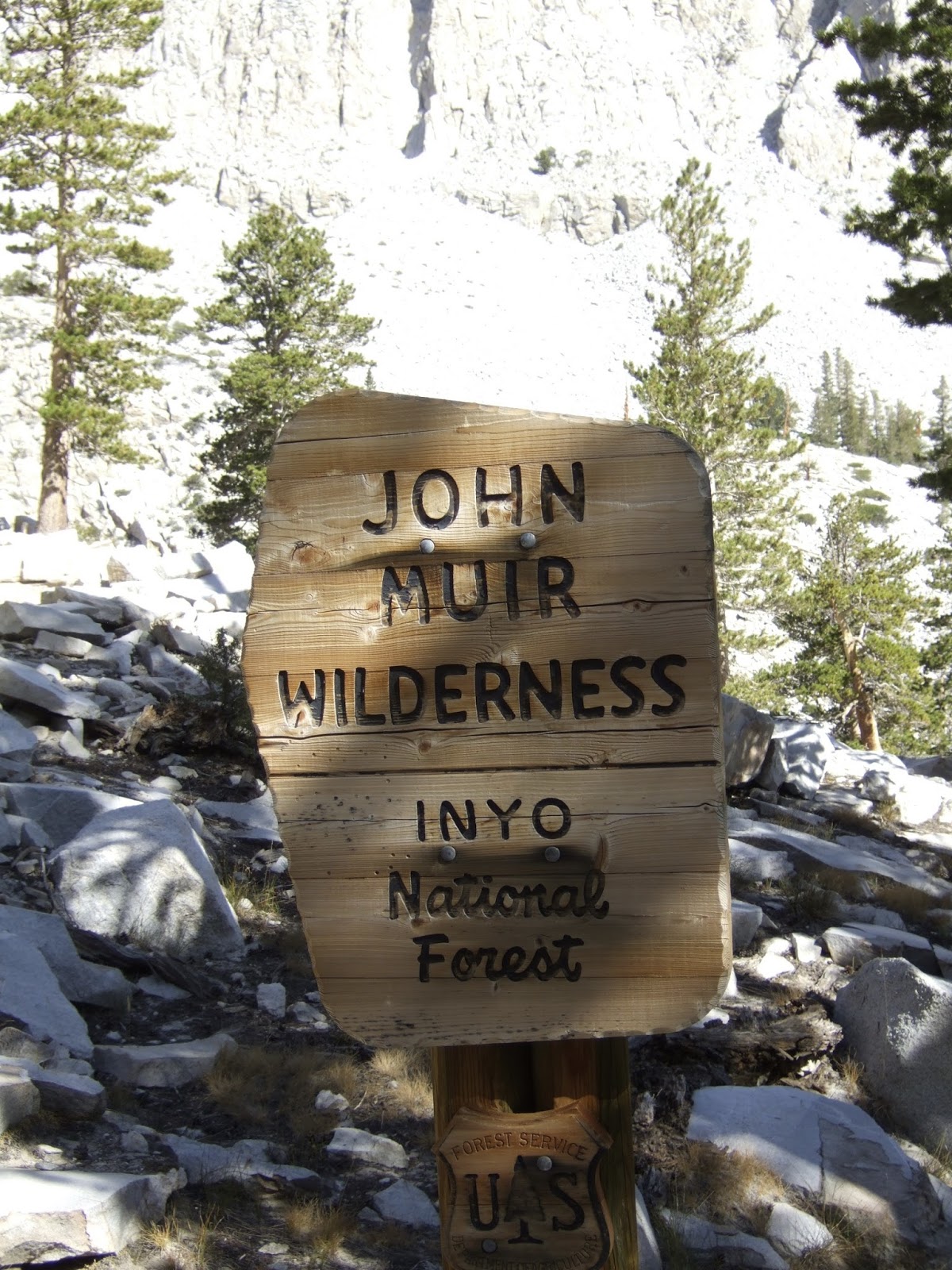
Photo by Jeff Cannon, taken on WV's service project in the John Muir Wilderness, Sierra NF, 8/11/13

Tuesday, May 07, 2013

WV Partners In the News - HawkWatch Intl and the Goshute Mountains

Check out this neat article in the May/June issue of Nevada Magazine about one of our partners, HawkWatch International.  WV's upcoming project June 2 - 8 in the Goshute Mountains is a combined project, as we'll work to maintain the trail used to access this important HawkWatch site.

Wednesday, January 02, 2013

Trip Spotlight: Alta Toquima Wilderness


Below is the first installment of what we expect will be a regular weekly feature of the WV blog – a spotlight on one of the many amazing wilderness areas where Wilderness Volunters will host a project in the next year. We plan to add a bit of insight into the unique features of the land where our projects occur and why we should all treasure what our wilderness areas provide. 
~~~


WV has many new service projects in 2013 and one we’re really thrilled about is in the Alta Toquima Wilderness in Central Nevada. The 35,860 acres of the Alta Toquima Wilderness officially became part of the now over 109 million acre National Wilderness Preservation System in 1989 and is managed by the National Forest Service as part of the Humboldt-Toyiabe National Forest’s 6.3 million acres, the largest national forest in the lower 48 states.
Even amongst the grandeur and beauty of the rest of the Humboldt-Toyiabe National Forest, the Alta-Toquima Wilderness stands out as a unique and significant area for our attention. The Toquima Mountain Range includes the massive and intriguing Mount Jefferson reaching just shy of 12,000 feet. The mountain offers terrific recreation opportunities with three summits, all connected over eight miles, with overwhelming biodiversity and plentiful fresh streams that support an incredible array of wildlife, including the nearly endangered sage grouse, native trout, bighorn sheep and many more.
The mountain offers more than hiking and has piqued scientific and human interest for a long, long time. The Wilderness area takes its name of Alta Toquima from the currently highest known native village in North America. In 1978, Dr. David Thomas of the American Museum of Natural History in New York surveyed the long abandoned site, ultimately disproving many archaeologists who believed that early American hunters avoided high altitude environments as too harsh and barren to sustain life. The survey and excavations at Alta Toquima proved that from 2500 BC to 0 AD, the mountains were used intermittently by small groups of hunters who seasonally exploited mountain sheep and permanent villages were constructed after that, around 1 AD. These new large, long-term settlements at Alta Toquima represented a major shift in how ancient Americans used mountain resources, and illustrate how archaeological research continues to teach us about the past.
Photo by Sage Ross
A century prior to that discovery, this mountain range was the catalyst for a different scientific revelation.  John Muir summited Mt. Jefferson on August 17th, 1877, noting its striking qualities and confirming the theory that the Great Basin was indeed carved of glaciers:
“…while making the ascent of Mount Jefferson, the dominating mountain of the Toquima Range,  I discovered an exceedingly interesting group of moraines, cañons with V-shaped cross sections, wide névé amphitheatres, moutonnéed rocks, glacier meadows, and one glacial lake, all as fresh and telling as if the glaciers to which they belonged had scarcely vanished.
….This is a very marked and imposing mountain, attracting the eye from a great distance. It presents a smooth and gently curved outline against the sky, as viewed from the plains, and is whitened by patches of enduring snow.”
-John Muir, Eureka, NV, 1878, The Writings of John Muir, vol. 8

The mountain still maintains significant scientific interest today, recently becoming designated as a Research Natural Area by the forest service given its extreme conditions and opportunity for the study of alpine plants and wildlife.
Indeed, the Alta Toquima Wilderness offers a great deal of exciting history, knowledge and beauty.  The Wilderness Volunteers service project there will allow you to visit, experience and enjoy this amazing land while giving something back.  We’ll camp at the lovely Pine Creek campground and work on the trails to provide access to the higher elevations, plus we’ll have an opportunity to explore and play in our free time.  Learn more and sign up for the WV service project in the Alta Toquima Wilderness.
If you’ve got a favorite wilderness volunteers project you’re partial to and have info or photos to share with us, please don’t hesitate to email info@wildernessvolunteers.org.

Tuesday, June 08, 2010

Crop Mob, Anyone?

Here's a neat article about a burgeoning nationwide movement involving volunteers, hard work, the great outdoors, "giving something back," the environment, and good food. Sound familiar?

You'd think we're talking about Wilderness Volunteers, but we're not. Though the ingredients are the same, the recipe is a little different. Read more about "Crop Mobbing" here.

Kinda like Wilderness Volunteers. . .but on a farm.

Thursday, June 03, 2010

Get Outside for National Trails Day

Maroon Bells Snowmass Wilderness, CO (2008)

This Saturday June 5th is National Trails Day, a nationwide event dedicated to increasing our awareness, understanding, and enjoyment of - you guessed it - trails.

Organized by the American Hiking Society, the day celebrates America's +200,000 mile trail network, recognizes the volunteers and organizations that develop and maintain this vast system, and seeks to inspire and encourage people of all ages and backgrounds to get outside and explore the great outdoors. Now in its 18th year, National Trails Day is celebrated in all fifty states by thousands of people, and hundreds of events - including hikes, bike rides, site dedications, trail work, gear demos, horseback rides, photography clinics, educational workshops, and canoe and kayak trips - are held across the country each year.

To learn more about National Trails Day and search for events in your area, check out the American Hiking Society's helpful guide here.

Between hikes in New York City and dog walks in New Jersey, horseback rides in Utah and birding tours in Minnesota, trail work in Oregon and orienteering workshops in Florida, there is something for everyone - everywhere! So pack a lunch, grab a friend, and go exploring.

Friday, March 19, 2010

Nesting Sea Turtle Rehab, Hawaiian Style

I just returned from the Hawaiian Volcanoes National Park service project where we backpacked 8 miles losing 2700-feet to get to a remote beach at Halape where we set up camp for a week of making the beach a more friendly place for rare hawksbill turtles, a critically endangered sea turtle, to nest. We started the hike in a mist, hiking through rainbows over a lava flow from the 1970s, and descending to a beautiful sunny oasis on the southeast side of the Big Island of Hawaii.As this sign below describes, these sea turtles are very rare and face continuing threats. One threat not listed on the sign is the invasive plants taking over the beaches making it hard for the mother turtles to reach a safe sandy place to make a nest, and all but impossible for the tiny hatchling turtles to negotiate on their way to the ocean. The prime offender is haole koa, leucaena leucocephala which grows in large thickets over beach sand making it difficult not only for the sea turtles, but for everyone visiting the beaches. We spent the days sawing, lopping and pulling these trees, clearing the forward beach areas along Halape and Halape-iki. We also removed an invasive passiflora vine and many large rocks from these beach areas just above the high tide line where the turtles look for nesting spots.Camping on the beach was wonderful, with the incredible ocean vistas, the views up and down the coast line, the nearby swimming lagoon and a brackish water plunge in a nearby crack for washing off at the end of the day. One afternoon we hiked to the nearby Keahou Beach where there is a more protected lagoon and spent several hours snorkeling amid the brightly colored corals and fishes.
The picture above shows our group posed under a carved coconut trunk (there were many standing sentinels along the campsite trail). Michal, Ashely, Igor, Randy and Lee joined me for this wonderful experience under the volcano. We will all have dreams of the baby turtles growing strong and being able to make it to the ocean this summer and fall due to our efforts.Mahalo to the Park Service for their organization and support, and their continuing efforts to protect these special places!

Wednesday, February 10, 2010

The Lost Generation?


Here's a creative video brought to our attention by a volunteer. I'll leave it at that. Watch for yourself.

Monday, December 14, 2009

One Man's Trash...

Last week, we highlighted the ingenuity of volunteers with a short post on the capabilities of geotextile, a seemingly obscure material that, thanks to some resourceful and creative minds, has become an invaluable backcountry work tool.

Keeping with that theme of resourcefulness and conservation, here's a fascinating look at ingenuity on another level: Dan Phillips, a 64 year-old self-taught carpenter and founder of Phoenix Commotion, has spent the last 12 years using that seemingly useless product otherwise known as trash to build homes - 14 of them to be exact! Approximately 80 percent of the homes are constructed from recycled materials, consisting of everything from picture frame ceilings to wine cork floors to scrap wood siding. And yes, people do live in them. Take a look:


Read more about Dan and his work here.

P.S. Intrigued by what can be done with your trash? Dan isn't the only one up to great things. Check out the work of TerraCycle and the "upcycling" movement for another look at ingenuity in action.


Tuesday, December 01, 2009

Wednesday, November 25, 2009

America's Wild Spaces

Denali National Park, AK (2007)

If you're looking for something to do this Thanksgiving, and watching the Cowboys annual Thanksgiving football game doesn't fit the bill, check out National Geographic's new series titled "Americas Wild Spaces."

The series takes an in-depth look at Yellowstone National Park (all 2 million acres of it, which makes it bigger than Rhode Island and Delaware combined), Death Valley (from its highest peak at 11,049 feet to its lowest point 282 feet below sea level), the Grand Canyon (which, yes, can be seen from space), the Appalachian Trail (all 2,175 miles, 165,000 white blazes, and 5 million steps), the Everglades (and its 1000 species of plants, 300 species of birds, and 27 species of snakes - 4 of them venomous), Yosemite National Park (home to Yosemite Falls, which is 13 times taller than Niagara, and giant sequoias that are wider than most city streets), Hawaii's Papahanaumokuakea Marine National Monument (try saying that ten times fast!), Canyonlands National Park (and its thousand year old rock art and petroglyphs), and Denali (home to North America's tallest mountain - which is still growing!).

The Thanksgiving day marathon begins at 2pm on the National Geographic Channel. Check the schedule here.

Interested in visiting any of these places? Check out the WV 2010 project list, which features projects in many of these locations. Spring projects have been posted, and Summer/Fall projects will be announced on December 4th.

Happy Thanksgiving...and Happy Trails!

Saturday, November 14, 2009

Leave No Trace

Maroon Bells Snowmass Wilderness, CO (2008)

For those of you interested in a Leave No Trace (LNT) refresher and for those of you new to the movement, check out this new online awareness course offered by the folks at Leave No Trace.

The Seven Leave No Trace Principals

1) Plan Ahead and Prepare
2) Travel and Camp on Durable Surfaces
3) Dispose of Waste Properly
4) Leave What You Find
5) Minimize Campfire Impacts
6) Respect Wildlife
7) Be Considerate of Other Visitors

You can watch the National Park Service LNT video here.

Thursday, November 05, 2009

On Fire

Sawtooth National Forest, ID (2007)

There's a fascinating post by New York Times columnist and evolutionary biologist Olivia Judson about the role of fire in nature, particularly forests. Whereas many of us often think of fire as a destructive force that ruins forests and wilderness, Judson points out that fire spurs new growth and can reinvigorate an ecosystem - which makes perfect sense.

But here's what's more interesting: many species of plants and trees in fire-prone areas appear to have evolved to be highly flammable. That is, these plants have evolved to cause fires as the propagation of their species - and the destruction of the competition - is dependent on their ability to burn. Read about what Judson calls the "torch-me hypothesis" here.

(For those of you that want to keep reading, check out Judson's post on the impact of large predators - or the lack thereof - on an ecosystem.)

Thursday, April 23, 2009

Doing Our Part


Wednesday was Earth Day. Many people look forward to this global celebration, which began nearly forty years ago on April 22, 1970 - a date which is widely recognized as the beginning of the modern environmental movement. It's a day when we all can pause and reflect on our role in the world, on our impact on the planet, and on the world we wish to pass on to our children. It's a day to reform bad habits and embrace new ones - a day to commit to turning off the tap while we brush our teeth, carpooling to work, replacing inefficient windows and light bulbs, switching to reusable grocery bags, recycling, and more. For some it's a day to celebrate a vision of a healthier planet; for others it's a day to bemoan the failures of mankind.

Walking through New York City's Grand Central Terminal this morning, I was reminded of these conflicting perspectives. Hundreds of hustling people - including myself - paused in the Main Concourse to gaze at a projection show displayed on the terminal's massive pillars as part of the city's week-long Earth Day NY celebration. Images of snow leopards, glaciers, and rainforests clashed with shots of polluted skies, landfills, and dirty, overfished oceans; smiles turned to sighs and shaken heads; and troubling statistic after troubling statistic played across the wall. Did you know that an area larger than New York City is deforested every day, and that the average American consumes more than 600 lbs. of paper every year? Or that we could reduce our consumption of oil by 100,000 barrels per day if we all took the time to properly inflate the tires on our cars?

Intermingled with these startling and disturbing facts were inspiring, hopeful words from some of the world's greatest minds, leaders like Dr. King and Mahatma Gandhi. Those of Edmund Burke, an 18th century Irish statesmen and philosopher, particularly struck me:

"Nobody makes a greater mistake than he who does nothing because he could do only a little."

I think he's right.

We all can do our part - however small it may seem - to be better stewards of the planet and our communities. Whether making smarter choices as consumers, practicing Leave No Trace in the outdoors, volunteering for the environment, or starting an eco-friendly business (check out TerraCycle and its exciting successes with "upcycling"), our individual efforts all add up to produce real results.

I think Wilderness Volunteers is living proof of that. Through the collective efforts of our volunteers, WV has contributed since its founding in 1997 more than 180,000 hours of volunteer labor - improving trails, revegetating wilderness, eradicating invasive species, removing fences, and more - in hundreds of wild places in need of our support.

And it all started with a few volunteers and a few trips and a few trails. There's still far more to be done and no shortage of work in sight, and we look forward to working with you to do our part - on and off the trail.

Thanks to everyone who's "given something back!"

Friday, March 27, 2009

2 Million Acres & More...

Yesterday, the US House and Senate approved a conservation plan protecting over 2 million acres of wilderness throughout the country. The Omnibus Public Lands Management Act now heads to the President's desk for his signature. Read more here.