Wednesday, February 06, 2013

Project Spotlight: Mojave National Preserve

A Joshua Tree in Mojave sunset light, photo by Paul Goldberg

Today we spotlight the WV project in the vast Mojave National Preserve, the 3rd largest unit of the National Park System in the contiguous US. Formerly named the East Mojave National Scenic Area and managed by the Bureau of Land Management, these striking 1.6 million acres were established as a preserve on Halloween in 1994 by the California Desert Protection Act, including a 695,000 acre wilderness area. Nestled between highways 15 and 40, the area offers many, many fascinating features and so much to explore. Towering mountain ranges present “sky island” forests of pinyon pine and white fir over great mesas, dry river beds and low-lying deserts featuring impressive sand dunes and beautiful Joshua tree forests.

Hole-in-the-Wall, photo courtesy of the US Dept. of the Interior
An intriguing human history is here to explore alongside unbelievable geological and ecological fascinations. Notable features include the Kelso Dunes, the Marl Mountains and the Cima Dome, which features the largest and densest stand of Joshua trees in the world. Striking volcanic formations such as Hole-in-the-Wall and the Cinder Cone Lava Beds speak to the incredible geology.  2.5 billion year old rocks have been found on the Clark Mountains.

The abandoned Post Office in the ghost town of Kelso, photo by Pierre Camateros
More recent human history can be seen in the preserve’s ghost towns, abandoned mines and the Kelso depot, now part of the visitor center.  Prior to European contact, Mojave tribes such as the Chemehuevi, lived in the mountains and along the Colorado river eating prickly pear, mesquite and roasted agave blooms and hunting deer and bighorn sheep.

A local Mojave tour guide, photo by Paul Goldberg

This dragonfly tried to hitchhike on my car's antenna, photo by Paul Goldberg

Despite appearing as a relatively barren landscape, the area is teeming with varied and interesting animal life including many species endemic to region or otherwise rarely found outside of the preserve. One such example is the Mojave Fringe-toed Lizard (Uma scoparia), which is specialized in its ability to "swim" under sand.

Birds, reptiles, rodents, and larger mammals all reside in the area, although where you might find them varies due to temperature, time of day and elevation. A large percentage of desert animals are nocturnal, or active at night, including desert rodents, bats, owls, mountain lion, skunks, and foxes. Other animals in the Mojave are crepuscular, active at dawn and dusk.


Mojave Desert Tortoise populations are threatened, partly because of invasive plants, photo courtesy of NPS
The low regions of the Preserve are arid, with creosote bushes dominating the landscape on over 70% of the Preserve, while the mountains offer varied environments with cooler temperatures.  The service project we’ll be working on will be critical in removing invasive species of Russian thistle at the key moment before they go to seed. We will use a hula hoe, a tool specifically designed for removing thistle. We’ll camp at a comfy developed campsite with running water in the mountains which will serve as a prime location for the project as well as offering plenty of interesting options for us to explore in our free time. Learn more about the WV project in the Mojave National Preserve.

The beautiful solitude of the Mojave National Preserve, photo courtesy of the NPS

Wednesday, January 30, 2013

Project Spotlight: Pecos Wilderness in the Santa Fe National Forest

Not a bad spot to give something back, WV 2011 Pecos Wilderness, Photo by Katy Giorgio
Now we turn our attention to the vast and beautiful Pecos Wilderness within Northern New Mexico’s Santa Fe National Forest. The Santa Fe National Forest was originally protected in 1915 and the Pecos Wilderness was among the earliest designated wilderness areas gaining protection in 1933 and again with added protection as a result of 1964’s Wilderness Act. The elevations vary greatly from the 5,000' valleys to the peaks of the Sangre de Christo Mountains that are the end of the great Rocky Mountain chain that stretches all the way from Alaska, with the peaks of Santa Fe Baldy and Truchas towering over 13,000'. The steep and narrow canyons of the west, provide drainage into the meandering Rio Grande, while to the east lies the serene broad meadows of the Upper Pecos River Valley, with wide mesas and peaceful grasslands that offer abundant wildflowers in the summer months.

Columbine wildflower in Pecos, Photo by Dave Pacheco

Unique among Wilderness Volunteers service projects in 2013, District Volunteer Coordinator, Jennifer Sublett has offered to lead participants on guided trips to learn of the striking wildflowers of the region which should be in great supply during our service project, as well as an astronomy program coupled with a night hike. This is a wonderful backcountry opportunity presented specially for our volunteers.

These beautiful, rugged mountains abound with forests of fir, pine and aspen and many gorgeous southwestern lakes and streams, home to the threatened native Cutthroat trout. Indeed, Pecos comes from a Native American term meaning, “a place where there is water.” Along with a wealth of wildlife (including black bear, big horn sheep, elk, mule deer and many more), the area supported an array of native tribes for hundreds of years. The Pueblo of Pecos served as a key stop on the trading route from tribes that hunted buffalo on the Great Plains to the east and the farming communities in the Rio Grande river valley to the west.

The beautiful Lake Katherine, which will be very close to our campsite in 2013, Photo by Jennifer Sublett

Given how close Pecos Wilderness is to the city of Santa Fe, this striking area sees much use and requires significant attention to maintain these trails that provide access to some of the most popular areas in the whole of the Santa Fe National Forest, such as Lake Katherine above and the popular peak of Santa Fe Baldy. 

Wednesday, January 23, 2013

Project Spotlight: Mission Mountains Wilderness


Photo by Katy Giorgio from WV's 2011 Service Project
Today we spotlight our service project in the broken and beautiful Mission Mountains of Montana, often called “America’s Alps.” Towering mountains, glacial lakes, clear cold streams and majestic falls are a few features of this area. The Wilderness protections of the Mission Mountain Range is unique in the nation, as it is composed of two adjacent designated wildernesses, one federal and one tribal. For centuries upon centuries, the Flathead and Pend Oreille people hunted, fished, gathered berries, and even went on vision quests in these rugged mountains. In 1979 the Confederated Salish and Kootenai tribes of the Flathead Nation designated the western slopes of these tribal lands as Wilderness, the only self-established Tribal Wilderness in the nation. In the words of the committee that protected the land (an effort led by three deeply dedicated grandmothers or "yayas"):

"These mountains belong to our children, and when our children grow old they will belong to their children. In this way and for this reason these mountain are sacred."

Photo by Tammy Rinaldi, WV 2010
The wilderness management of this rugged range is thus divided between the Confederate Salish and Kootenai Tribes and the Flathead National Forest. The WV service project will focus on the Mission Mountains Wilderness within the National Forest - 73,877 acres managed by the Swan Lake Ranger District.  This beautiful stretch of protected land runs 30 miles along the crest of the Mission Mountains on the eastern edge of the Flathead Indian Reservation.  The area abounds with beautiful wildflowers and a wide variety of trees including western red cedar, ponderosa pine, western whitebark pine, douglas fir and even the unique alpine larch. There is abundant wildlife throughout the land, including moose, coyote, wolverine, elk, deer, lynx, bobcat, marmot, rabbit, mink, more than 50 species of birds, and many, many more.  The king of these forests, however, is the grizzly bear.

Photo: Creative Commons / Mousse

The grizzlies have made this land their home long before Europeans reached this continent and they continue to seek refuge in these mountains.  Every year bears gather on the glacial fields of McDonald Peak to gorge on insects, as well as the delicious huckleberry that is enticing to bears and hikers alike. From mid-July to October, all 12,000 acres of tribal lands are closed to public use for the bears' protection.


Photo by Jeffrey Gutman, WV 2012
The specific work of the service project will be decided by the partnering Ranger District after the snow melts and the damages from the harsh northern winter can be assessed. We will backpack in and likely camp by a clear glacial water source to allow access to cooling dips as well as to offer a chance to enjoy the bountiful fishing of the area. We’ll have pack animal support for our tools and kitchen supplies, as we work to restore trails and campgrounds after a rough, cold Montana winter.  Learn more about WV’s service project in the Mission Mountain Wilderness.

Photo by Tammy Rinaldi, WV 2010


Wednesday, January 16, 2013

Project Spotlight: Goshute Peak


The view from high in the Goshute Mountains
Today’s WV service project spotlight falls in Elko County in the Northeast corner of Nevada. Altering the path of Interstate 80 is the Toano Range and Goshute Mountains, offering the distinctly rugged and remarkable beauty of the Great Basin. Steep canyons boast rich biologically diverse forests of juniper, fir and many varietals of pine.  The region presents terrific recreation opportunities, including backpacking, hiking, and climbing. 

Photo by Jerzy Strzelecki
Our project is in the Goshute Peak Wilderness Study Area (WSA) in the southern half of the range, and along with neighboring Bluebell WSA to the north, present vital habitat and navigational pathways to migrating raptors. The Goshute Mountain Range is part of a critical international skyway for migrating birds traveling with the seasons. We’ve partnered on this project with Hawkwatch International, a nonprofit that runs the important Goshute Mountains Raptor Migration Project each fall, tracking up to 25,000 raptors from 18 species over the course of seven weeks. 


Photo courtesy of Hawkwatch

The Hawkwatch Field Station, which will serve as the WV basecamp, offers striking, broad views in the clear high desert sky. Our service project will provide needed trail maintenance on the Goshute Peak trail, the only path to the station, allowing safe access for our partner’s important scientific work. This service project will help keep researchers and volunteers safe on their hike to and from the field station. This is one of the largest concentrations of raptors on one of the most important migration corridors in the world and maintaining the trail is key to the efficiency and safety of those that study it. Learn more and sign up for the first Wilderness Volunteers Service trip to Goshute Peak WSA. 
~~~ 

Given the cold winter weather occupying much of the country currently and thinking of migrating birds, we’ll end this post with these fitting, eloquent words from Rachel Carson:

The moon at sunset in Goshute Peak WSA
Those who dwell, as scientists or laymen, among the beauties and mysteries of the earth are never alone or weary of life. […] There is symbolic as well as actual beauty in the migration of the birds, the ebb and flow of the tides, the folded bud ready for the spring. There is something infinitely healing in the repeated refrains of nature - the assurance that dawn comes after night, and spring after the winter." 
Rachel Carson in The Sense of Wonder

Thursday, January 10, 2013

Pemigewasset Wilderness


 by Preston Cottrell    Embarking on my first Wilderness Volunteers project was intimidating. I had some skills in working and living in the outdoors, but I really did not know what to expect going into the trip. I was surprised at how organized, supportive, and encouraging the leaders were about all aspects of our journey. My fellow participants had their own special qualities as well. Larry was a knowledgeable guide, quick to jump into any adventure. Jack’s empathetic nature reminded us of why we were there: to give back to our planet and to one another. Wes provided a perseverance and work ethic that powered us to the very end of the week. John M and the entire Forest Service crew were so much fun to be around. They were all understanding of the work that needed to get done but were wonderful people to sit down with and relax at the end of the work day.

Every day in the Pemigewasset Wilderness we experienced the majesty of the outdoors and being immersed in such an environment challenged us to rely on one another and appreciate our commonalities. Our wonderful cooks made tasty food which was enhanced by taste buds responding to the outdoor setting. Somehow oats and vegetables just tasted better in the outdoors. Each day I was reminded that even though we worked hard, nature had a way of rejuvenating our spirits in a way that city life could not.


Overall, I feel the work we did mattered. I know more about myself and nature, and I made new friends with whom I hope to cross paths again. For all these reasons, I would love to do another WV trip.

Wednesday, January 09, 2013

WV Presentations in PA and NJ

REI is hosting two Wilderness Volunteers presentations, the first at the REI Conshohocken (Pennsylvania), on Jan 15 at 7PM, and REI Marlton, (New Jersey) on Feb 26 at 7 PM. You can get directions to either store by clicking on the links above.

Rick Volpe, a WV Board Member and veteran of 9 seasons of projects will be joined by other local Wilderness Volunteers participants to answer your questions about the organization and tell you what really happens on projects, and if the food is really that good (yes!). Find out more, and then take the plunge and sign up to Give Something Back to our wild lands in 2013.

From the REI Conshohocken website: Ever wonder who maintains and builds those trails you hike on? Who clears the fallen trees and brush, keeps invasive plant species at bay, or revegetates habitat and transforms those muddy, washed out sections of trail into navigable and inviting footpaths? People just like you - on service trips with Wilderness Volunteers. And we want you to come join us! A national nonprofit in its 15th year, Wilderness Volunteers partners with the National Park Service, US Forest Service, Bureau of Land Management, and US Fish and Wildlife Service to organize and promote volunteer service projects that would go undone without volunteer support - Wilderness Volunteers runs 50 week-long service trips each year throughout our national parks, forests, and wilderness areas. Stop by to learn what it's like to spend a week "Giving Something Back" in some of the country's most beautiful places and learn how you can join us on one of our 2013 projects, which run from March to October. For more information, visit www.wildernessvolunteers.org.

Trip Spotlight: Continental Divide Trail in the Gila National Forest


Photo from WV's CDT Service Project in the Gila NF 2012
Today we turn the spotlight onto WV’s service project along the Continental Divide Trail (CDT) in the Gila National Forest. There are lots of interesting tidbits about the history of the land and the remarkable CDT in addition to the abundant hot springs and diverse wild beauty of the area. Established as a National Forest in 1905, the Gila National Forest offers a vast and remote cross section of natural southwestern splendor, from the dry, flat semi-desert terrain in the lowlands up to rugged, high mountains and canyons. The 6th largest National Forest in the continental US, Gila boasts a broad and robust biodiversity and a unique confluence of ecosystems with riparian systems adjacent to high desert and old growth forest.
Flowering cacti in the Gila National Forest
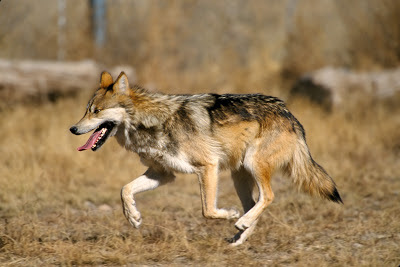
This land is also the birthplace of America's wilderness-conservation movement, as the Gila Wilderness within the National Forest was established as the very first designated wilderness in the country in 1924. The rewards of wilderness designation can be found throughout the unspoiled land. The Mogollon Mountains top out at 11,000 feet and support rich high spruce, juniper, aspen and fir forests, while down at 4,200 feet octoillo as well as chihuahuan and upper sonoran desert cacti dominate the landscape. Wildlife such as the black bear, mountain lion, elk, deer, antelope, bighorn sheep, and wild turkey roam the area while the bald eagle, peregrine falcon, and the red-tailed hawk are amongst the birds that soar overhead. Many imperiled species reside in the Gila National Forest including the mexican spotted owl, mexican grey wolf, gila chub, southwestern willow flycatcher, loach minnow, spikedance and more.
Mexican Grey Wolf, Photo by Jim Clark USFWS
Indigenous populations have a longstanding history with this land. An ancient Puebloan people, the Mogollon, are thought to be the first human settlers in the area. Before or after our service project, you can visit the ancient past with a trip to the Gila Cliff Dwelling National Monument, located within the National Forest, to see the remarkable structures within five sandstone caves. It is not known why the dwellings were abandoned 700 years ago, although Hopi oral tradition does say migrations occurred due to cycles of beliefs and in response to changing climate. 
Gila Cliff Dwelling photo by NPS Photo, Barry Nielsen
Our service project is one of two we have that focuses on the construction of a segment of the epic Continental Divide Trail (CDT). Stretching from Mexico into Canada, the trail travels 3,100 miles following the Continental Divide along the Rocky Mountains, traversing Montana, Idaho, Wyoming, Colorado and New Mexico. Established in 1978, the CDT offers opportunity for adventure with one of the most significant features on the continent. The trail is about 70% complete and includes dedicated trail and small roads. We'll work on the trail while based in a spike camp in the nearby forest, hiking to work everyday where we'll construct tread, brush the trail corridor, and install erosion controls. This trip is suitable for seasoned volunteers as well as beginners in good shape who want to learn about camping, trail construction and Leave No Trace. Learn more and sign up for WV’s Continental Divide Trail Project in the Gila National Forest.
Photo taken during WV's Gila NF Service Project 2012