A dozen endangered Sierra Nevada bighorn sheep were released in Yosemite National Park last week. They included nine ewes and three rams from the Inyo National Forest and Sequoia National Park.
The Sierra Nevada bighorn is the only federally endangered mammal in Yosemite, listed in 2000 after the population plunged to record lows (around 100). The park estimates that prior to the arrival of white settlers, the bighorn populations likely numbered in the thousands.
"Bighorn sheep are a true symbol of wilderness and represent the need to protect wild lands," said Frank Dean, Yosemite Conservancy President. "With the reintroduction, visitors will experience a wilderness similar to that found in the days of John Muir, when large alpine wildlife was abundant."
Read more here.
Tuesday, March 31, 2015
Monday, March 16, 2015
Wilderness Trends
The Forest Service conducted surveys in 1970, 1982 and 2004 to look at the most used trailheads, frequency of visits, and reasons for visiting wilderness along with other questions. They noticed that visitors to wilderness are increasingly older, more experienced, and have more education (62% had four-year college degrees or higher). Another shift was that wilderness users aren't staying as long as they used to; in 1970, the average number of nights was 5.1 compared to 3.3 in 2004.
In the Boundary Waters Canoe Area Wilderness, the average age of a visitor in 1969 was 26, in 1991 it had increased to 36, and in 2007 the average was 45.
What trends have you noticed in the backcountry?
(source at this link and this link)
Labels:
age,
Boundary Waters,
BWCAW,
education,
wilderness
Tuesday, March 03, 2015
First Grid-connected Wave Power Plant Goes Live
The world's oceans are vast wilderness areas, a place where few people venture although many of our habits wreak havoc upon the waters. In Australia, a potentially good use has gone live recently. The world’s first wave power station has been activated off the coast of Western Australia (WA). The technology uses wave swells to create zero-emission power and zero-emission desalinated freshwater. The system is fully submerged with a buoy tethered to a pump on the ocean floor.
The Perth Wave Energy Project is the first grid connected commercial scale demonstration of this technology. More information here.
Labels:
ocean,
wave energy,
wilderness
Friday, February 27, 2015
New National Monuments Declared
![]() |
| Chalk Cliffs of Browns Canyon, Colorado. Photo by John Fielder / Friends of Browns Canyon |
For outdoor recreationalists, the victory in the campaign for Monument status for Browns Canyon is the culmination of more than two decades of work to gain permanent protection for this area. Originally proposed as 35,000 acres, the proposal, which includes defined wilderness, was scaled back to ensure feasible management as a BLM National Monument. The Friends of Browns Canyon has been spearheading the effort since chartered in 2003.
This area is not only notable for its renowned whitewater rafting, but also the pristine forests, unspoiled wildlife habitat, excellent rock climbing, mountain biking, hunting and fishing that engage visitors year-round. The land has been managed as a BLM Wilderness Study Area and National Forest Roadless Area for many years.
What do you think about the new National Monuments? Any interest is helping the BLM steward this land on a service project in the coming years? Let us know in the comments section below.
And here's a way cool graphic of all the new National Monuments over the last few years.
![]() |
| Image courtesy of ThinkProgress |
Friday, February 20, 2015
Canyon Country Adventures Await
In just a few short weeks, the 2015 Wilderness Volunteers project season will kick off with a full trip to the Mojave. Get out of the cold and into the wilderness with projects across the southwest (and Hawaii), such as these projects on the Colorado Plateau:
Moab Arches and Towers, Moab BLM, Utah
Moab is a paradise for hikers, with many landforms unparalleled in the world. Our project there runs the week of April 19th - 25th whre we'll work on the trails to arches and views of the Colorado River and Fisher Towers.
San Rafael Swell, Sids Mountain WSA, Price BLM, Utah
The San Rafael Swell is one of most striking areas in all of the wild western United States. With slot canyons, gorges, mesas, desert streams and so much more. This is an area all wilderness lovers should explore, at least once. Read more about the April 19-25th trip in this blog post and sign up for the adventure on the website.
Escalante River, Glen Canyon NRA, Utah
This project is the continuation of a fourteen year project removing invasive Russian olive trees from the Escalante River watershed. The work is needed and this rugged landscape must be experienced. Join us April 26 - May 2.
Hammond Canyon, Manti-La Sal National Forest, Utah
![]() |
Join WV out in Canyon Country from May 10-16th for a trail maintenance project amongst fascinating ancient history and scenic beauty. This extremely underrated area promises to impress you and reward your stewardship efforts.
North Rim, Kaibab National Forest, Arizona
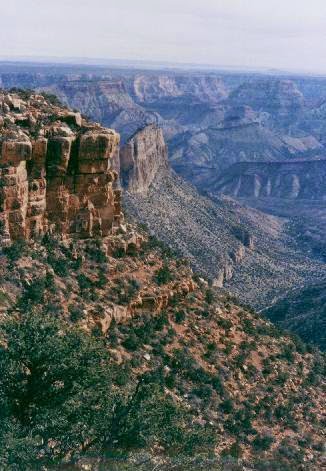
When you think of canyons, there is one in particular that stands out - the Grand Canyon. Join us in northern Arizona in an area outside of the National Park and spend the week working from the Kaibab Plateau brushing trails that lead to the North Canyon. Read more and signup up for the WV service project on the North Rim, Kaibab National Forest, May 24 - 30, 2015.
And more! If you need help deciding which project is right for you, send us an email or give us a call at (928) 255-1128 - we'd love to hear from you.
Wednesday, February 11, 2015
The Birth of the Pulaski and the Great Fire of 1910
| Volunteer Ed Leonard sharpens his Pulaski on a WV trip in Dolly Sods 2012 |
Last week the television series American Experience, which airs on PBS stations across the country, featured an in-depth documentary on the massive fire of 1910 in the northern Rockies, The Big Burn. Still unsurpassed in American history, this gigantic blaze burned more than 3 million acres and over 100 lives were lost in a weekend. The documentary details the impact this fire would have on the burgeoning National Forest Service and the tenuous political climate surrounding Gifford Pinchot and the agency's growth under President Theodore Roosevelt. Also detailed in the documentary is the valiant efforts and particular history of one assistant ranger in Idaho, Ed Pulaski.
For anyone who has swung a Pulaski and/or cares about the history of our public lands, it is a really interesting tale. Luckily, if you missed it, you can watch it below. More information is also available on the American Experience website.
Please let us know what you thought of this documentary in the comments section below.
Labels:
Big Burn,
fire prevention,
Idaho,
Leave No Trace,
Montana,
National Forests,
nature,
PBS,
Pulaski,
Wild Films,
wilderness
Thursday, February 05, 2015
Project Spotlight: San Rafael Swell - April 19-25, 2015
![]() |
| Photo of the San Rafael Swell, from photographer Vera de Kok, |
Spaces are available on a spring WV service project in one of the most striking areas of the Colorado Plateau - the San Rafael Swell. Geologically referred to as a massive domal anticline (a convex fold of the earth), the Swell is marked by slot-canyons, valleys, gorges, mesas, desert streams, geologic formations and buttes. Despite being only several hours from Salt Lake City, the San Rafael Swell offers an incredible wilderness experience with a multitude of recreation opportunities and an abundance of solitude.
![]() |
| Randy Kahn took this 2014 photo contest winning shot of volunteers heading to work on the WV project in the San Rafael Swell last year. |
![]() |
| Endangered Winklers Cactus (Pediocactus winkleri), Photo by Daniela Roth, USFWS |
![]() |
| Photo by Randy Kahn from last year's WV San Rafael Swell project |
We'll camp by our vehicles at a remote site in the Sids Mountain Wilderness Study Area, picked out by our agency partners out of the BLM office in Price, Utah. From there we'll make daily hikes to work sites and explore the vast and wild San Rafael Swell. Learn more and come join us on a spring service project adventure in this remarkable place! And don't fret too much if the April dates don't line up with your calendar - we have a fall trip in the San Rafael Swell as well.
![]() |
| Another great shot from Randy Kahn from last year's project |
See more great photos from the 2014 WV San Rafael service projects over at the WV Photo Gallery.
Labels:
2015 trips,
archeology,
desert,
geology,
hiking,
Leave No Trace,
San Rafael Swell,
trip spotlight,
Utah,
volunteer,
volunteer vacation,
wild,
wilderness
Subscribe to:
Posts (Atom)


.jpg)